



The Danish fishing sector faces the dual challenge of reductions in both cod and mackerel quotas in the year ahead, and while the outlook isn’t bright, the Danish Fishers PO feels there is room to manoeuvre on both.
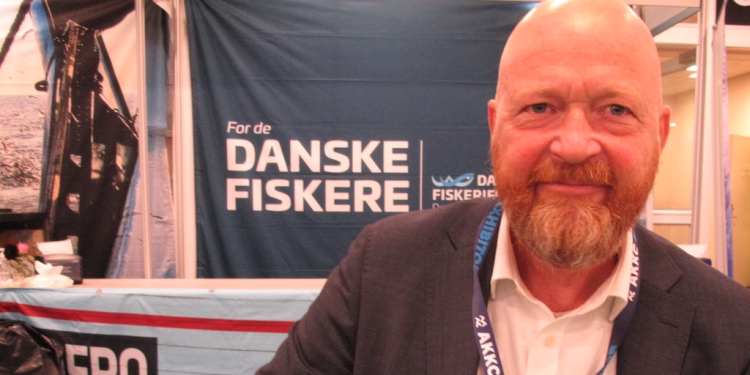
The ICES zero-catch advice for North Sea cod is a concern, but DFPO chief executive Kenn Skau Fischer says that cod is complex, as the advice applies to three stocks that mix and are caught together – and of these just one is in a state. that calls for such a strict restriction.
‘Cod is a by-catch with everything – even in pelagic fisheries,’ he said. ‘We hope that we can see some sense here and that a quota can be agreed. There’s room to manoeuvre, and we trust that managers and politicians will take responsibility. So we hope to see a quota set at a reasonable level,’ he said.
‘But the ICES approach of seeking to force cod to settle in the southern North Sea seems to be adrift from reality. This is climate change that’s at work here.’
He commented that the ICES advice for a 70% reduction in the mackerel TAC for 2026 is harsh.
‘But this advice is a sensible response to overfishing over many years. Something has to be done in this respect,’ he said.
‘The European Union has stuck to its quota levels while others have been more greedy. That’s mismanagement.’
He commented that although the situation has become increasingly serious as Coastal States have failed to agree on allocations over a number of years, invariably with parties setting their own quotas, we’re not facing the collapse that NGOs have been predicting.
‘There’s a possibility of a workable solution. The reality is that the ICES advice has enormous economic effects – although the biomasses of both cod and mackerel look to be healthier than they were ten years ago. There are challenges here, as today there’s an expectation of a larger biomass to ensure sustainability,’ he said.
‘Given the advice, we hope people will reflect on this and while it won’t be easy to reach a solution, we hope to see some responsibility in the room. This needs to be rational and it shouldn’t become a blame game.’