




A report by Norwegian Seafood Research Fund FHF concludes that regulations governing fishing vessel length and applying to the under-21m fleet contribute to higher emissions and can also have effects on energy efficiency.
Prepared by SINTEF Ocean and Nofima, in collaboration with Marin Design and Moen Marin, the report highlights how current regulation of coastal vessels can affect energy efficiency, safety and the possibility of green transition.
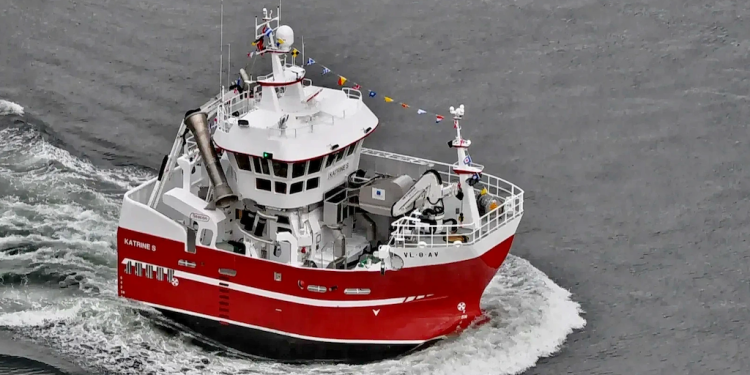
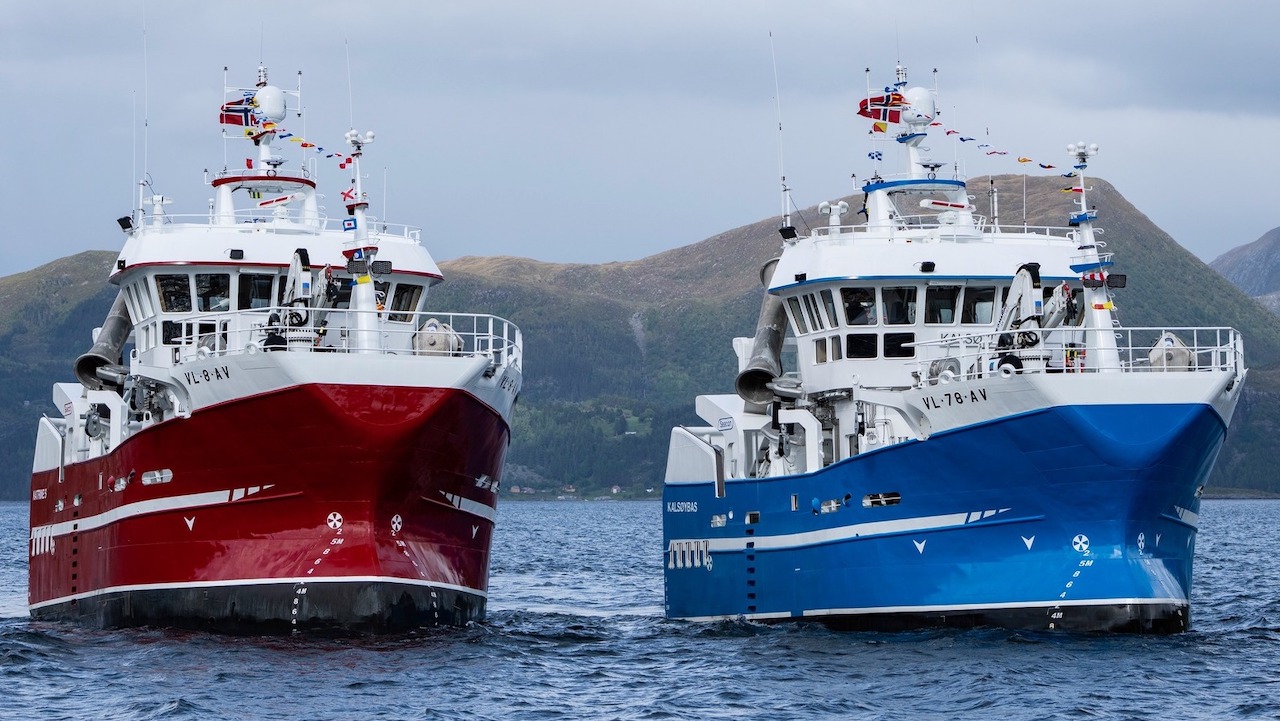
Known in Norway as paragraph vessels, these are vessels designed to make the most of a vessel’s economic capacity within the framework of regulations on length and other factors. In particular the report refers to a generation of vessels with an exceptionally broad beam relative to length, resulting in excessive water resistance and therefore higher energy consumption compared to more balanced hull shapes.
‘The report from SINTEF points to an important bottleneck for lower emissions from the coastal fleet. When vessel lengths in practice shape vessel types, it could contribute to us having more paragraph boats that use more fuel than other options,’ said FHF technical manager Eduardo Grimaldo.
‘At the same time, it may appear that the smaller vessels have fewer opportunities to phase in emission-free technology, because in that case they would have to sacrifice cargo capacity.’
The report sets out that green technologies are often more space and weight-intensive than diesel-based systems, and that this can make phasing in challenging within current length limitations. The conclusion is that length limits contribute to vessel types with higher fuel consumption and weaker seaworthiness, while forming a bottleneck for the phasing in of emission-free technology.
As part of the project, hydrodynamic analyses (CFD) were conducted on three case vessels in the length classes <10.99m, <14.99m and <20.99m. The analyses show that hull lengthening can significantly reduce resistance and energy requirements. For the case vessels, the report shows a potential of up to 50% reduction at higher speeds (10–12 knots), and typically 30–40% at normal transit speeds (8–10 knots).
At the same time, the report discusses that changes in regulatory form can affect fleet structure, capacity and landing patterns, and that the outcome will depend on, among other things, the quota basis, investment costs and financial incentives.
‘Although the Finnmark model and the length restrictions that come with it have disadvantages, they also contribute to ensuring a differentiated fleet in coastal communities – and this is linked to the port structure we have today,’ said Eduardo Grimaldo, commenting that there is a political trade-off that needs be made.
‘Should we prioritise facilitating low-emission or emission-free vessels with today’s technology, or should we focus more on developing less space-consuming technology while preserving today’s vessel classification?’