




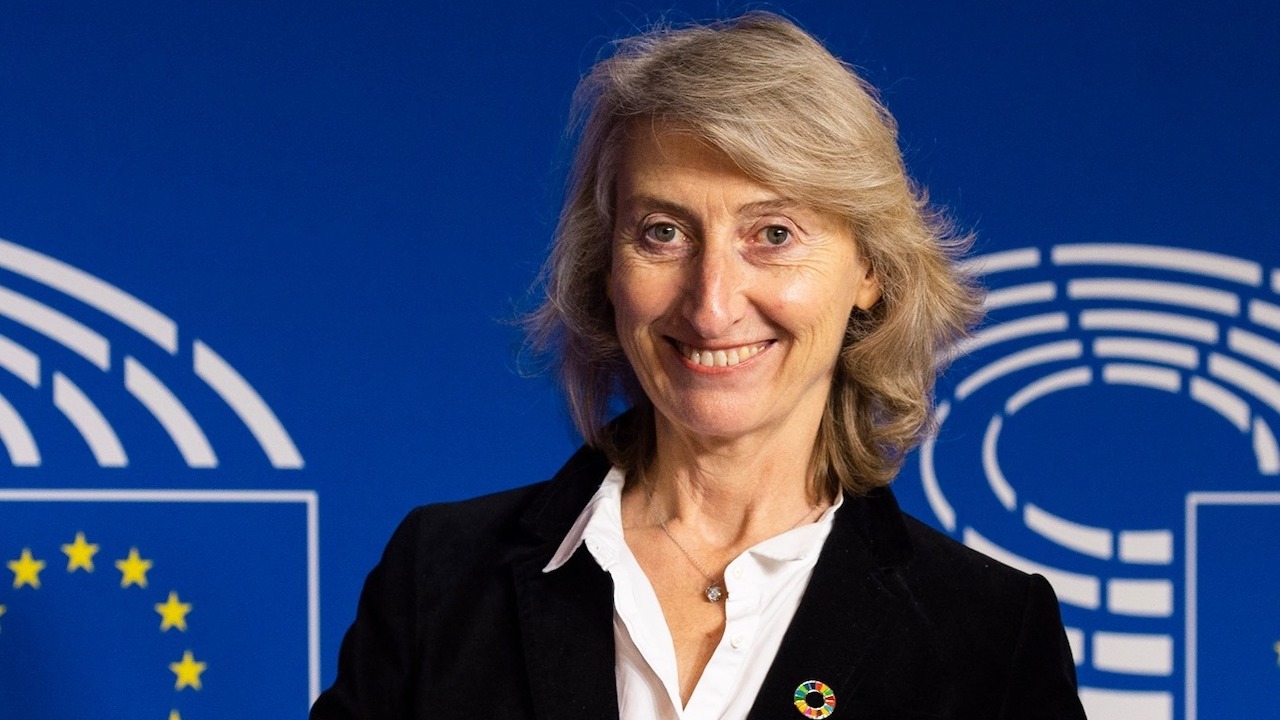
Speaking at the Assises de la pêche et des produits de la mer conference held in Cherbourg, France’s Minister for the Sea and Fisheries Catherine Chabaud has confirmed that the month-long January-February closure of Bay of Biscay fishing grounds will remain in place next winter.
She commented that even with compensation made available, a closure is not the preferred option. Following three years of winter closures, 115 fishing vessels are equipped with cameras, enabling analysis of by-catches, but the full analysis will not be available until later this year.
‘Given the administrative process with the Commission and the potential for legal disputes, we had to make a decision now. We concluded that the conditions were not right to reopen the Gulf next year,’ the minister said.
‘I have heard your proposals regarding adjusting the closure period. Therefore, I have decided on a four-week continuous closure, but within a six-week window. As the Prime Minister pledged, compensation will be renewed under the same conditions as this year to support the closure.’
Catherine Chabaud touched on a number of subjects, including a series of five priorities, of which the first is renewal and modernisation of the fishing fleet.
‘Fleet renewal also means decarbonisation. More modern vessels are more fuel-efficient, more environmentally friendly, and therefore more economical in terms of energy costs. The crisis in the Middle East reminded us that decarbonisation is as much a climate emergency as an economic one. That is why, without waiting for the revision of the Common Fisheries Policy, I am currently submitting a request to Brussels for the simplification and facilitation of funding for fleet renewal through a comprehensive fisheries initiative,’ she said, commnting that this would open the way to authorising public aid for the renovation of vessels in service, for the simplified acquisition of a vessel for young fishermen, and for the construction of a vessel, making it conditional upon the prior decommissioning of another vessel, and secondly to adapt the measurement system, without changing the pressure on resources, in order to allow the decarbonisation of vessels via a ‘decarbonisation and modernisation measurement system’, without waiting for the revision of the common fisheries policy.
She touched on the touchy issue of maritime spatial planning, and coexistence of different fishing professions.
‘Ensuring the future of fishing means ensuring that everyone can continue to practice their profession in a better-organised environment. In this respect, the Eastern Channel presents a real challenge. To improve coexistence, I have launched a consultation process across the region, the conclusions of which will be submitted to me in July. At this stage, it highlights a fairly widespread demand to reserve the coastal strip for vessels under 25 metres,’ she said.
‘Following this consultation, if the final report validates these results, and before making a final decision, I will launch a consultation with the Member States concerned, in order to inform them of our intention to exclude vessels over 25 metres in length from the 12-mile zone in the Eastern Channel in view of the sensitive issues of coexistence.’
A further priority is the ability to adapt to the changes being observed right nowin the ocean.
‘You see this firsthand, and your observations are invaluable – smaller fish in the Mediterranean, species like mackerel and tuna migrating north. Climate change is accelerating these trends, and we must collectively understand them better. This means listening more closely to your field observations and better integrating them with scientific data,’ she said, commenting that this means improving dialogue with scientists, continuing dialogue with environmental protection organisations, and seriously addressing the issue of invasive species.
‘I believe we must turn a problem into an opportunity. I realise it’s not so simple, but we need to find ways to make use of these resources, for example, blue crabs or Rapana venosa [in Charente-Maritime], as proposed by some companies,’ she said.
‘What is happening in our waters should lead us to be more agile in managing quotas. For the past two years, an experiment has been underway to allocate quotas annually from the national reserve as well as from established historical rights. These experiments must be analysed, and depending on their results, further steps should be taken to strengthen the socio-economic and environmental criteria in quota allocation, as called for in Article 17 of the Common Fisheries Policy. This is work that we, the State and industry professionals, must undertake together.’
Catherine Chabaud stated that she advocated for a budget for fisheries and aquaculture at least similar to that of the previous period – and recently succeeded in obtaining a new proposal that doubles the initial one.
‘In the face of the increasing number of crises, the State has stood by you and continues to do so. This roadmap is ambitious. And I strongly believe in ongoing dialogue between us. I am convinced that solutions will emerge from the local communities. I am here to offer an optimistic vision for the future.’