




The Centre for Fisheries Monitoring and Communications (CFMC), part of Russia’s Federal Agency for Fisheries is cooperating with scientific bodies and IT developers to produce a modelling system of forecasting fish abundance, utilising artificial intelligence.
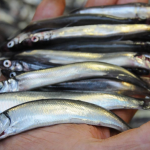
The system was tested during this year’s ivasi sardine season, when the fish were mainly outside Russian waters.
‘The programme analysed areas where ivasi sardine would be likely to accumulate and the fish were located outside the Russian zone. We plan to continue using this system, including to forecast the movement of other marine stocks. The model will be further refined and improved,’ commented Agency head Ilya Shestakov.
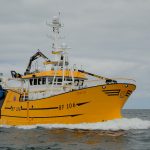
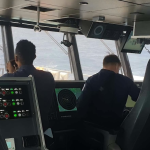
The system collates satellite and hydrological data, which is processed using specialised software to generate probability maps of fishing areas. These are supplied to participating fishing vessels for skippers to use the data as part of the decision-making processes during fishing operations.
According to the Federal Agency for Fisheries, flexibility and capacity to learn are key features of the system developed by the Center for Fisheries Monitoring and Communications staff, who are also working on models for mackerel and Alaska pollock, and they plan to then move on to saury, working with a dynamic habitat model trained on large sets of historical data for each fish species.
A series of key parameters are used in analysis, including sea temperature, salinity, sea level, currents and concentration of zooplankton and chlorophyll-a. Atmospheric conditions and phases of the moon are part of the equation, as are the effects of seismic activity on fish behaviour.