


The EU Long Distance Fleet Advisory Council (LDAC) has adopted new advice calling for a stronger and more coherent regional approach to the management of small pelagic stocks in West Africa, with a particular focus on sustainable fisheries management, food security and the livelihoods of coastal communities. This comes at a critical moment for the management of these shared resources at international level.
One of the central recommendations made by the LDAC is for the EU is to explore, together with West African coastal states, regional organisations and fisheries stakeholders, the creation of a Team Europe Initiative dedicated to the sustainable management of small pelagics, food security and the livelihoods of coastal communities.
Such an initiative could bring together EU and Member State financial, technical and policy instruments and strengthen coherence between fisheries partnership agreements, regional scientific programmes, fisheries governance mechanisms, investment in local value chains and actions supported under the Global Gateway.
The LDAC also calls for stronger institutional support for the SRFC/CSRP, enabling it to play an enhanced role as a regional platform for coordinating small pelagic management measures in cooperation with CECAF/COPACE, FAO and sectoral and stakeholder organisations.
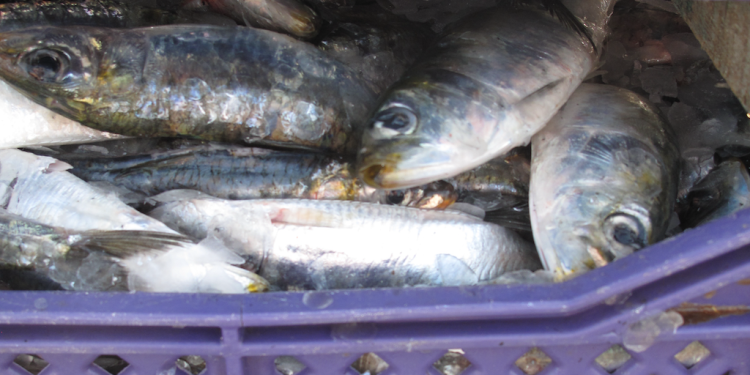
Small pelagic species such as sardinella and ethmalosa play a fundamental role in West African marine ecosystems, food security and coastal economies. However, recent scientific assessments by CECAF/COPACE indicate that several stocks are overexploited and require coordinated management at regional level.
Against this background, the LDAC welcomes recent steps towards greater regional cooperation, including the commitment by the African Sub-Regional Fisheries Commission (SRFC/CSRP) to coordinate national management plans for small pelagics and the development of common management measures across the sub-region.
The LDAC considers that these developments, together with the implementation of the EU-funded West Africa Sustainable Ocean Programme (WASOP) and discussions on the priorities of EU strategy for fisheries external action in 2027, provide an important opportunity to strengthen regional fisheries governance. At the same time, the LDAC stresses that regional cooperation should support, rather than replace, national responsibilities for fisheries monitoring, data collection, control and implementation of management measures.
According to LDAC, improving the availability and transparency of fisheries data is another core element of the advice, and it recommends establishing, in cooperation with CECAF/COPACE, a regional mechanism for the compilation, analysis and regular publication of total catch data, covering artisanal and industrial fisheries and both European and non-European fleets.
This mechanism should also improve information on fish destined for fishmeal and fish oil production, including its impacts on food security, regional markets and artisanal processing sectors.
The advice further recommends using sectoral support available under EU SFPAs (sustainable fisheries partnership agreements) to strengthen the sharing of scientific data and participation in regional research campaigns. This will also serve to promote greater coordination and policy coherence between European Commission and EU regional programmes.
The LDAC stresses that regional fisheries management should go beyond biological stock management and take account of the wider social and economic importance of small pelagics for coastal communities.
It therefore calls for EU-supported initiatives to explicitly consider food security, nutrition, employment, the role of women in artisanal fish processing and the social impacts on coastal communities. Continued investment in post-harvest infrastructure, conservation, transport and local processing is also recommended to strengthen local value chains.
Finally, the advice advocates stronger stakeholder participation through cross-border sectoral committees, regional dialogue involving governments, scientists, professional organisations and civil society, and pilot programmes for participatory science involving small-scale fisheries, women processors and scientific institutes.
Through these recommendations, the LDAC seeks to encourage a more integrated regional framework capable of balancing the ecological, economic and social dimensions of small pelagic fisheries and strengthening cooperation between the EU and its West African partners.