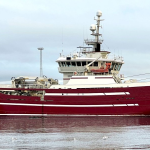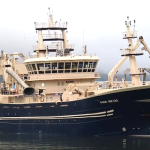

In the year that more than fifty Dutch beam trawlers left the fleet, Urk fishermen Jelle Hakvoort pushed against the 2023 trend by placing an order for a new trawler, Janneke Z-575, which has now started fishing.
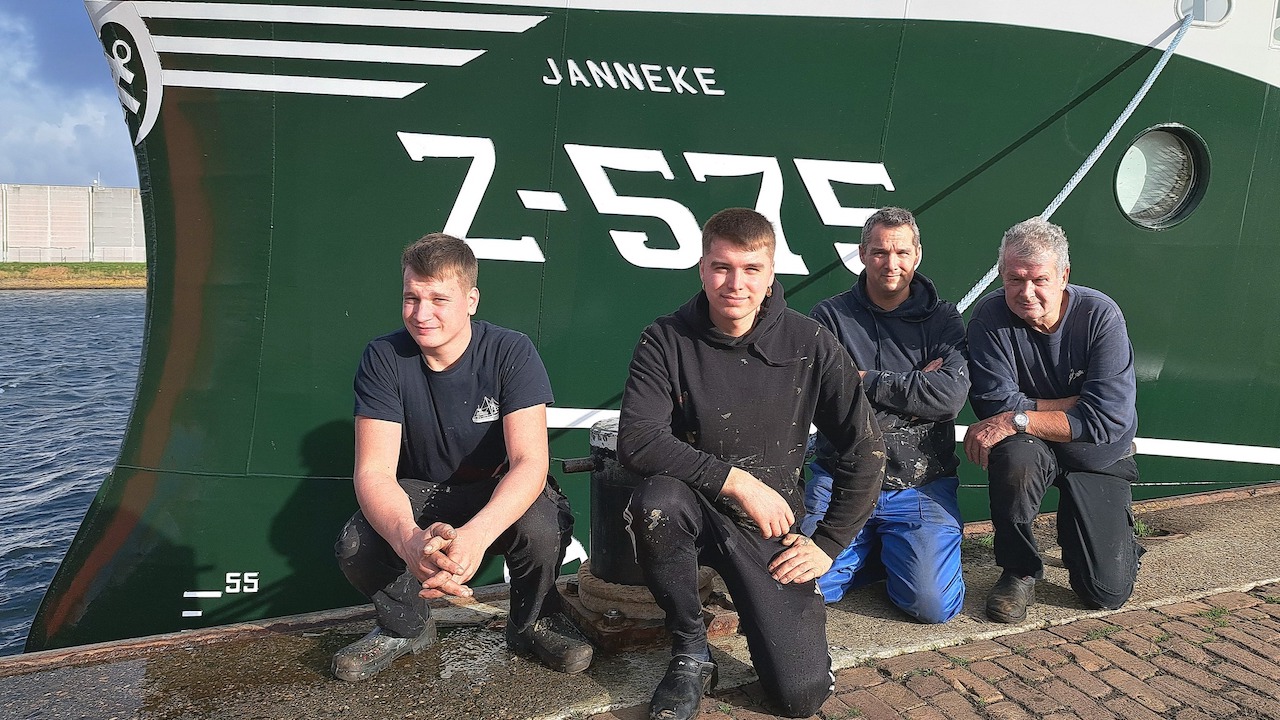
He commented that it’s important to show confidence, and to remain in the fishing business it’s essential to innovate. Z-575 is designed for efficient operation with an oversized propeller, a modern Yanmar main engine and the ability to operate efficiently with low fuel consumption.
‘I’m confident that we can brun 15 tonnes less fuel per trip that the large beam trawlers,’ he said, adding that Z-575 is also more confortable than the older generation of trawlers, with more crew space, air conditioning and two showers on board. ‘There are modern requirements if you want to keep crew,’ he said.
Z-575 is a multi-functional vessel able to work with twin-rig gear in the summer and beam gear during the winter.
‘This is how we target all the important species in the bottom fishery, such as langoustine, place, sole, turbot, squid and scallops,’ he explained, adding that as they are under the Belgian flag there is more access to fishing grounds in the North Sea and the Channel, as well as the Bay of Biscay, the Irish Sea and Liverpool Bay.
‘To work these grounds you need a reliable, powerful vessel that is fuel efficient,’ he said.
‘Fish prices are good because there are fewer boats left, while the demand for seafood continues to grow. Sole remains expensive because catching capacity has decreased and the size of the quota – completely unfairly – has also taken a big hit. There is more than enough sole and other fish in the sea, and catches are usually excellent. For a fishing company this is a favourable state of affairs.’
According to Jelle Hakvoort, fishing needs sufficient political support and confidence, both in the The Hague and in Brussels.
‘An ongoing fisheries policy is vital. There needs to be enough space to fish. That’s possible only if the sea doesn’t completely turn into an industrial area for wind energy. Under continued pressure from nature and environmental organizations, it could also turn out that bottom fishing is banned in more and more places. That would mean the end of the Dutch and Belgian fishery. I trust it will not come to this point, because strong fishing countries like Spain will never accept that,’ he said.
‘I am always surprised that green politicians always talk about the ecological footprint of the fishery, but then only watch how fish is caught. While more and more fish, including farmed fish, is shipped around the world at an increasingly greater cost. Is that sustainable? Let’s not lose sight of our own seafood, from our own fleet, caught close to home and responsibly.’