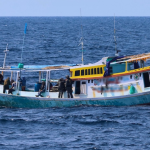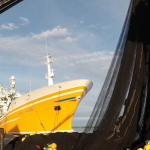
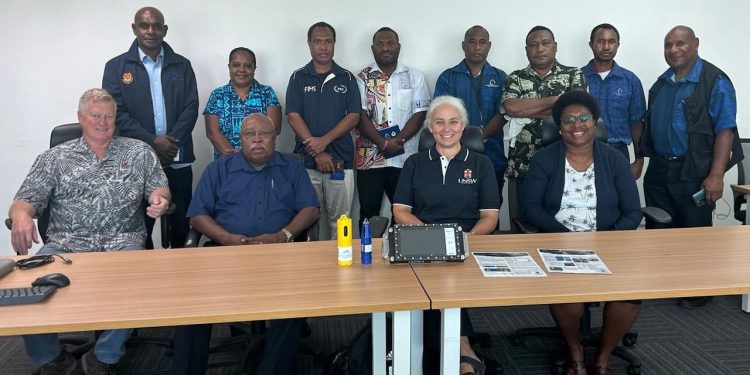





Scientists from the Pacific Community (SPC) in Noumea and the University of New South Wales in Sydney Australia (UNSW) have rolled out a programme in Papua New Guinea to collect new information on the ocean environment, using local commercial tuna fishing vessels as Ships of Opportunity.
The program in PNG is being implemented in collaboration with the National Fisheries Authority (NFA) and the Fishing Industry Association (FIA). Representatives of the groups met in Port Moresby to consider priorities and initiatives for the successful roll out of the programme.
The impacts of climate change on the Western and Central Pacific Ocean (WCPO) marine ecosystem are becoming evident in increased extreme weather events, including droughts and marine heatwaves, and the re-distribution of tuna stocks as a consequence of changing oceanic conditions.
‘Droughts and marine heatwaves have significant impacts on life on land and in the seas. Forecasting and projections for the availability of tuna in national EEZs with consequential implications for national economies dependent on income generated from their commercial tuna fisheries, and on local food security, is a second significant material impact,’ said Leontine Baje, from the Pacific Community in Noumea, commenting that both have significant implications for PNG.
Professor Moninya Roughan from the UNSW advised that data for the key oceanic environmental variables, particularly temperature and how it varies with depth, are critical to ocean and meteorological modelling.
‘This data is currently sparse for the WCPO. An increase in these observations will lead to significant improvements to the quality and confidence in oceanographic, meteorological and fisheries forecasts and projections,’ she said.
Sylvester Pokajam, chairman of the PNG Fishing Industry Association, advised that these vessels in PNG are volunteering to collect this critical information. In this case they effectively serve as Ships of Opportunity and is evidence of a significant contribution of the fishing industry to this critical research.
He noted that this will lead to a major change in the scope and quality of information available to climate scientists and ocean modellers. ‘Subsequently, it will have profound implications for Pacific Island countries, including PNG, in terms of their weather-related disaster preparedness and in improved management of local fisheries as tuna respond to changing oceanic conditions,’ he said.
Benthly Sabub, the National Fisheries Authority’s manager of tuna fisheries, reiterated the significance of the research to the future management of regional tuna fisheries.
‘I hope the cooperation with industry in this endeavour serves as a positive example to the tuna industry operating in other Pacific Island countries to make similar contributions. The results are anticipated to benefit us all,’ he said.