



For the first time recycled nylon derived from scrapped fishing gear and other sources is being put through rigorous full-scale sea trials.
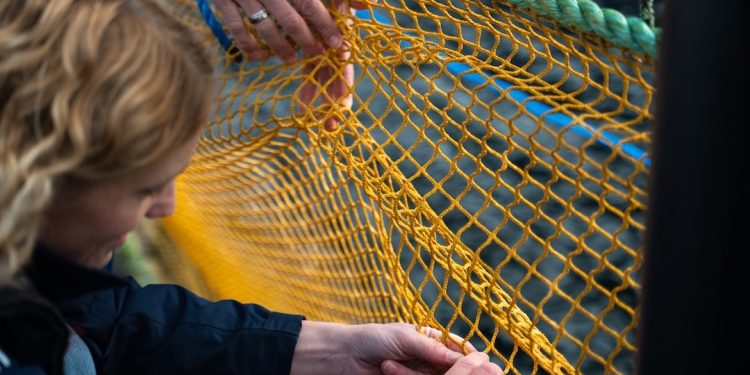
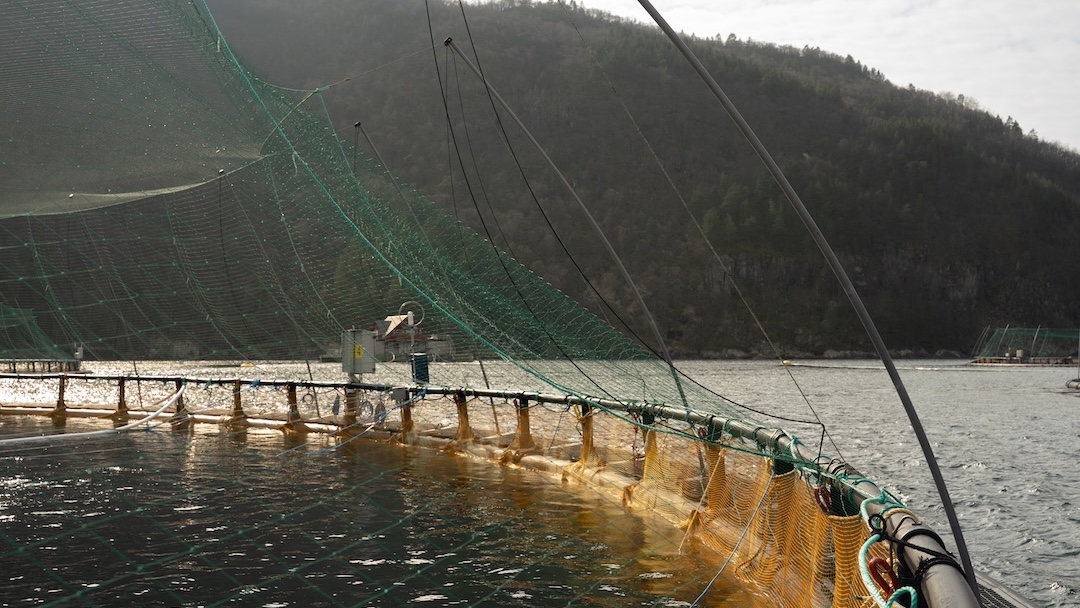
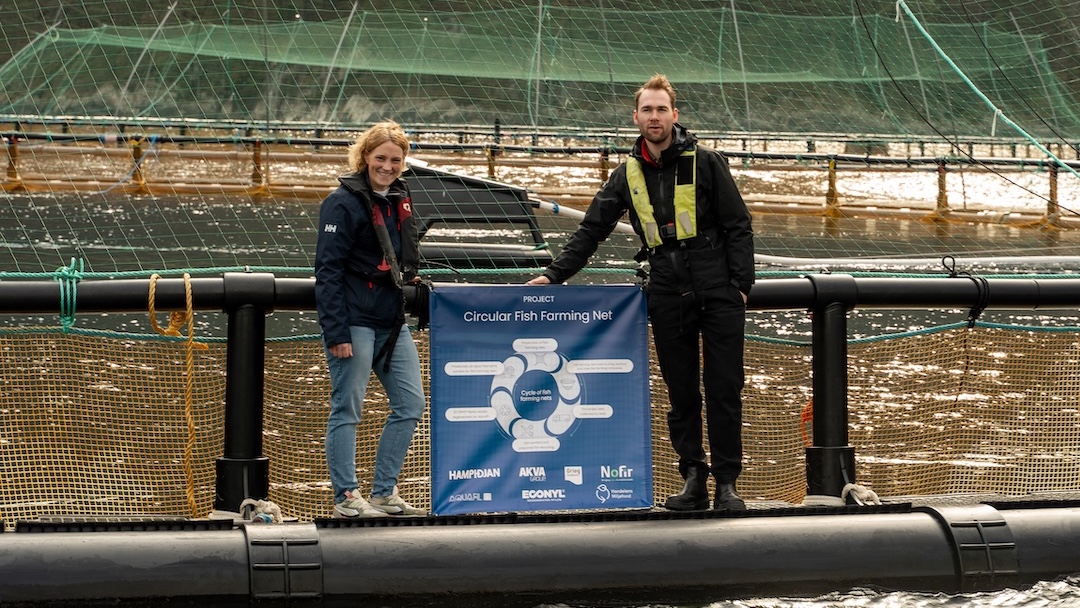
The recovered nylon has been used to manufacture salmon cages that are being tested at full scale on a Grieg Seafood location in Norway. These trial farm nets made from 100% recycled nylon are the outcome of a collaboration between some of the leading players in fishing gear and aquaculture, bringing together AKVA Group Egersund Net, Aquafil, Grieg Seafood and Hampiðjan and recycler Nofir to demonstrate that circularity can become the new normal.
The raw material comes from discarded nets, fishing gear and other nylon-based waste, collected by Nofir and processed into the high-quality filament ECONYL® by Italian company Aquafil. The nets have been produced by AKVA group Egersund Net and Hampiðjan.
‘This is genuinely the future. The fact that we have documented that recycled nylon can maintain the same quality as virgin nylon in a demanding farming net is a milestone,’ says Jostein Iversen, senior advisor at Grieg Seafood.
The project is supported by the Norwegian Trade Environmental Fund and shows how end-of-life gear from the fishing and aquaculture sectors can become new high-quality products. Testing indicates that these circular nets can withstand the extreme stresses required in modern aquaculture.
‘The first nets have been thoroughly tested and are now in use. Everything indicates that they work just as well as conventional nets,’ Jostein Iversen said.
In Norway fishing and aquaculture are large consumers of plastic, and while the circularity rate with recycling is currently around 35%, the potential is there for this to exceed 81%.
‘This project shows that circularity is possible in practice. We believe that nets, feed hoses, cages and other plastic products in the industry could be produced from recycled materials within a few years,’ said Nofir CEO Øistein Aleksandersen.
‘In general, the initial costs of sustainability projects are high. But this shows that it pays off. In a few years, I believe that most nylon nets will be made from recycled material.’
Karen Kvalheim, innovation manager at AKVA group Egersund Net, and Georg Haney at Hampiðjan believe that this experience and technology have great transfer potential.
‘We hope this inspires others to think in circular terms. It is possible – and the blue industries are leading the way. This also has great relevance for other industries and international markets,’ Karen Kvalheim said.