




The draft EU–Indonesia agreement published by the European Commission provides preferential market access for tuna – which industry figures warn will result in further destabilising the market for European producers.
‘Indonesia is already a key supplier of raw material for EU canneries. Additional preferential access risks further displacing EU-caught fish in a highly price-sensitive market segment,’ warns Europêche president Xavier Leduc.
Under the agreement, fresh and frozen tuna fillets would be carry a 0% duty from entry into force and no quota, while processed tuna products are subject to tariff-rate quotas of 5,000 tonnes per year for tuna loins and 800 tonnes per year for cans, both duty-free within the quota only.
Preferential access is conditional on strict rules of origin, meaning that only tuna caught by Indonesian vessels, or by EU vessels and processed in Indonesia, can benefit.
Europêche wants to see changes made before this agreement is finalised, requesting that the quota for tuna loins should be aligned with that for canned tuna and limited to 800 tonnes, to avoid disproportionate exposure of EU fleets, and asking that tuna fillets should not be fully free and should instead be treated similarly to tuna loins, given their high value and competition with EU vessels’ products meeting the highest environmental and sanitary standards. Europêche is also calling for the elimination of the ATQ for tuna loins, as such volumes should not coexist with additional preferential access granted under trade agreements.
Europêche points out that while the European Union is strengthening its internal framework through instruments such as the Forced Labour Regulation and corporate due diligence rules to prevent products made under unacceptable labour conditions from entering its market, the Indonesian trade agreement relies, like others, on non-binding commitments when it comes to fundamental labour rights.
‘In practice, partner countries are merely encouraged, rather than required, to ratify and effectively implement core ILO conventions, with no enforceable obligations or meaningful sanctions attached. This inconsistency undermines the EU’s credibility and creates an uneven playing field for operators expected to meet high standards within the EU,’ said Anne-France Mattlet, director of Europêche Tuna Group.
Indonesia is the largest tuna producer country in the Indian Ocean with a vast EEZ and a huge fleet, from industrial to artisanal tuna fleets. It is the largest single allocation holder for skipjack and bigeye, and one of the leading players for yellowfin, making it the largest overall stakeholder in the IOTC tropical tuna fisheries.
Its dominant position already translates into strong access to the EU market, with the existing Autonomous Tariff Quota (ATQ) of 35,000 tonnes for tuna loins, widely used by third countries, notably Indonesia. Between 2020 and 2023, Indonesia exported approximately 33,195 tonnes under this quota (around 25%), and the ATQ for 2024–2026 remains unchanged and rapidly exhausted each year.
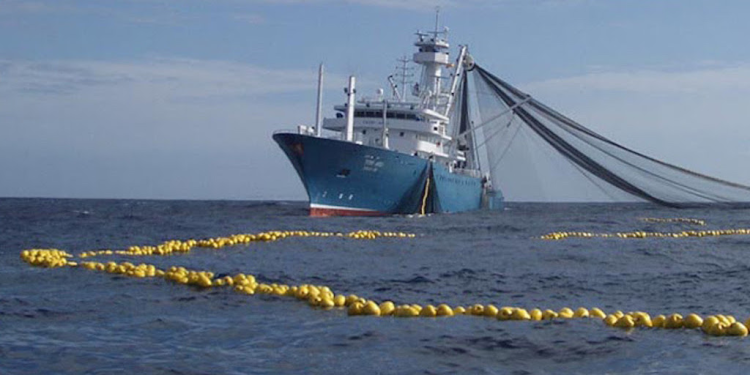
Europêche states that the EU tropical tuna purse seine fleet, which supplies the European canning industry, is directly exposed to this competition.