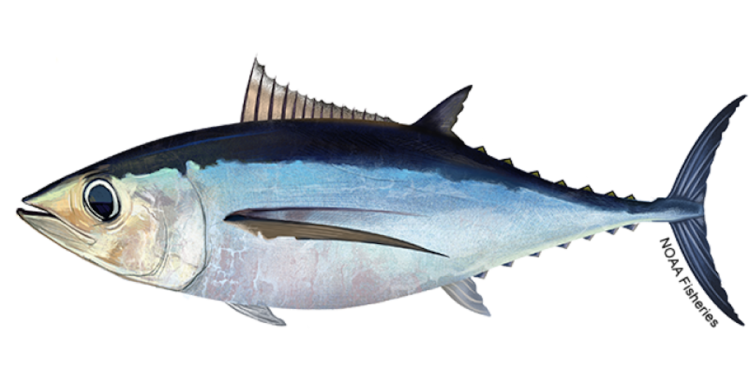





After nearly two decades of negotiation, and representing a historic advancement in regional fisheries cooperation, a landmark agreement has ben reached on allocation of South Pacific albacore tuna.

Officials have reached consensus on the long-standing issue of South Pacific albacore (SPA) tuna allocation within the Exclusive Economic Zones (EEZs) of the Pacific Island Forum Fisheries Agency (FFA) Members south of the equator. These agreed allocations will form the basis of a binding agreement under the FFA Allocation Framework for SPA, reinforcing the region’s commitment to sustainable, equitable, and responsible tuna fisheries management.
‘This outcome is a major step forward for the Pacific,’ said Honourable Mona Ainu’u, ministerial chair of the Forum Fisheries Committee (FFC).
‘South Pacific albacore is the backbone of our tuna longline fisheries and the economies of many of our coastal states. This agreement signals our unity and determination to protect our resources for future generations while also enabling fair economic returns today.’
This paves the way for a modernised, zone-based approach to longline fisheries management and the newly adopted framework will help advance the region’s position in broader negotiations at the Western and Central Pacific Fisheries Commission (WCPFC) such as the adoption of a SPA Management Procedure and its Implementation that recognises zone-based management; and high seas management.
‘This decision exemplifies Pacific solidarity,’ said FFA Director-General Noan David Pakop.
‘It shows that our Members can come together to make bold, science-based, grounded in fairness and anchored in the Pacific Way of cooperation.’
Although the SPA stock remains healthy, declining catch rates have affected economic viability of the fishery especially for Pacific Islands domestic fleets. This agreement ensures management decisions consider stock health and the economic viability of the Southern longline fishery.
SPA is a key tuna species for the domestic longline fisheries of Pacific Island countries, supporting thousands of jobs, livelihoods, and national revenue streams across the region. It sustains local processing industries and is integral to food security and economic resilience in many coastal communities.