
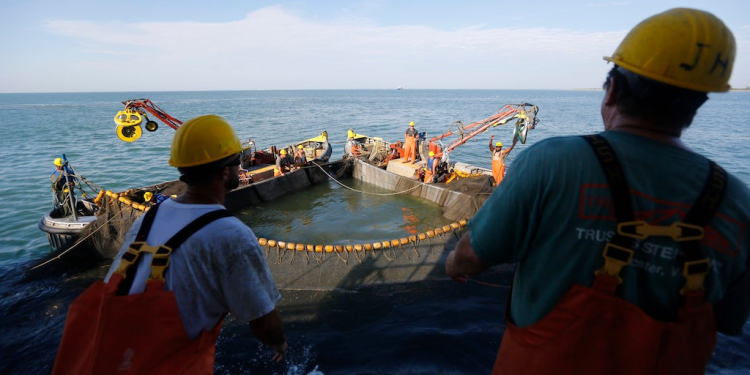





The Menhaden Fisheries Coalition is challenging an 9th October congressional letter, led by Senator Chris Van Hollen (D-Md.) and Representative Sarah Elfreth (D-Md.), urging the Atlantic States Marine Fisheries Commission (ASMFC) to impose further restrictions on the Atlantic menhaden fishery, before critical Chesapeake Bay research has been completed.
The proposed restrictions threaten a predominantly minority, unionised workforce whose families have depended on the Reedville, Virginia fishery for generations. For more than a century, the industry has helped sustain Virginia’s Northern Neck communities. United Food and Commercial Workers (UFCW) Local 400 has documented the importance of these jobs.
The Southern Christian Leadership Conference (SCLC) has raised concerns about the disproportionate consequences of further restrictions for African American workers, union families and rural communities, calling for environmental stewardship and sound science alongside economic justice.
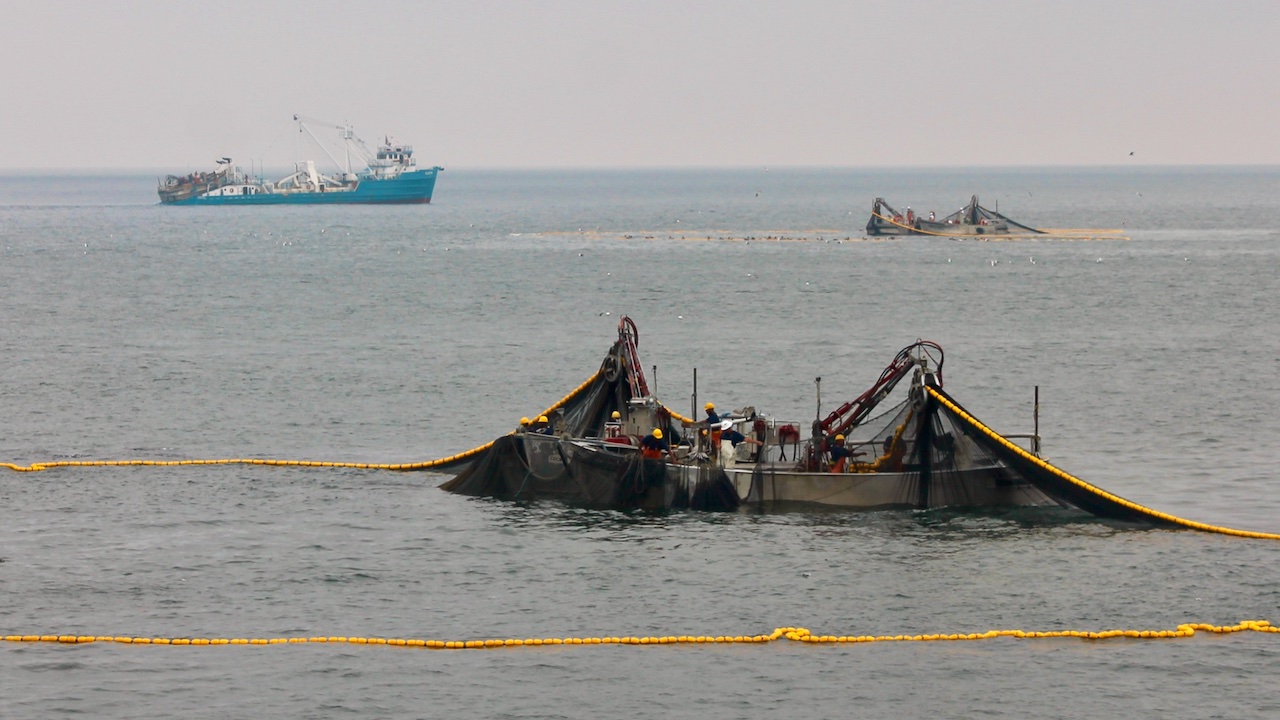
Ocean Harvesters and Omega Protein’s Reedville operations provide approximately 250 to 300 well-paying jobs with benefits. A review by the ASMFC’s own Committee on Economics and Social Sciences cites estimates of more than 500 full- and part-time reduction fishery jobs in Maryland and Virginia, including hundreds in Northumberland County. It also warns that further restrictions could threaten the viability of the entire Reedville operation.
The Virginia Institute of Marine Science confirms that scientists lack sufficient data to determine adult menhaden abundance or survival in the Chesapeake Bay – and there is no scientifically established Bay-specific harvest threshold or validated adult abundance index demonstrating that commercial fishing has depleted menhaden to an unsustainable level.
Virginia has committed $2 million over two years to new Chesapeake Bay menhaden research. Senator Van Hollen helped secure another $2.5 million in federal funding for a Bay-specific menhaden survey. Yet he is now leading an effort to impose additional restrictions before the research he helped fund produces results.
While lawmakers call for ecosystem-based management, the ASMFC already adopted ecological reference points (ERPs) in 2020, following years of work among the commercial fishery, recreational fishing interests, conservation organisations and scientists. Since 2021, those reference points have guided catch limits by accounting for the menhaden needed as prey. Striped bass was selected as the focal predator because the model found it most sensitive to menhaden harvest. The ASMFC’s 2025 ecosystem review also included osprey in the supporting full ecosystem model. The lawmakers have not explained why further restrictions would achieve benefits beyond this existing ecosystem-based system, or why it is inadequate.
Major recreational and conservation organisations helped advocate for the adoption of this system and publicly praised it when the ASMFC approved it. In a 5th August 2020 announcement, Theodore Roosevelt Conservation Partnership President Whit Fosburgh called it a “landmark decision” and “a new era in fisheries management.”

The American Sportfishing Association welcomed predator-sensitive quotas as “the science-based management we look for.” Coastal Conservation Association Maryland applauded “a more holistic approach,” and the Congressional Sportsmen’s Foundation called the decision a “significant step” in science-based fisheries management. The Marine Retailers Association of the Americas also endorsed the new approach.
The ASMFC’s own ecological reference point analysis found that even ending all menhaden fishing would not, by itself, rebuild striped bass to its biomass target; sustainable recreational and commercial striped-bass fishing remains essential. And the ASMFC’s April 2025 Chesapeake Bay review analysed eight datasets covering 298,232 striped bass and found, using Fulton’s Condition Factor, that the sampled fish “are not starving and would be considered healthy.” Their body condition does not directly measure menhaden abundance, but it provides strong evidence against widespread striped-bass starvation.
The Menhaden Fisheries Coalition states that signers of the congressional letter were misled into believing that Atlantic menhaden are overfished.
‘The facts are clear: according to the ASMFC’s latest assessment, Atlantic menhaden are not overfished, and overfishing is not occurring,’ a Menhaden Fisheries Coalition representative commented.
‘The Commission already reduced the coastwide catch limit by 20% for 2026. The Atlantic menhaden purse seine fishery is certified sustainable by the Marine Stewardship Council (MSC). Whole Foods Market, an MSC partner since 1999, describes it as the world’s leading certification program for sustainable wild-caught seafood, involving independent review of fish populations, ecosystem impacts and responsible fishery management.’
The Menhaden Fisheries Coalition further states that the existing Chesapeake Bay harvest cap was never based on a scientifically quantified biological threshold. During a May 2008 congressional hearing, then-ASMFC Executive Director John O’Shea reportedly described the cap as established “in response to a political problem” and said “there was not a science basis for the Cap,” as documented in published accounts of his testimony. His written testimony describes the cap as a precautionary response to public concern. In 2018, then-ASMFC Chairman James Gilmore Jr., responding to Virginia’s appeal of the reduction to 51,000 tonnes, stated that “Leadership agrees the Amendment does not provide sufficient evidence to support such claims” – referring specifically to the argument that lowering the cap was necessary to protect the Bay as a nursery area. His statement is also reflected in the ASMFC’s published proceedings.
‘The lawmakers have not established that further restricting this fishery would produce those environmental benefits,’ the industry states.
‘The ASMFC should reject further Chesapeake Bay cap cuts and mandatory seasonal allocations until the research can establish their necessity and likely benefits. Hundreds of working families should not pay the price for restrictions unsupported by completed Bay-specific science.’