




Anticipating targeted campaigns against bottom trawling during UNOC3, and in response, the International Coalition of Fisheries Associations (ICFA) is reaffirming its position that responsible bottom trawling is both sustainable and essential. As the 2025 UN Ocean Conference (UNOC3) gets underway next week, ICFA is asking policymakers to recognise the vital role of sustainable fisheries in ocean governance, food security, and climate resilience.
‘Sustainable fishing must be recognized as part of the solution to global environmental and food challenges,’ said ICFA chair Ivan López Van de Veen.
‘With 82% of global wild-capture fish volume already coming from sustainable sources, the fishing sector is not the problem – it’s a partner in progress.’
ICFA’s key messages are that with the majority of global fisheries already sustainably managed, ICFA urges governments to work toward 100% effective management – which means incentivising innovation in fishing practices and collaborating with the sector to utilise its extensive data and science.
ICFA also points out that sustainable seafood is essential for the health and well-being of more than 3 billion people. ICFA reminds Member States that sustainable seafood supports not only SDG 14 (Life Below Water) but also contributes directly to SDGs 1, 2, 3, 8, 12, and 13. A further key message is that all sustainable fishing, regardless of gear type or vessel, plays an essential role in the biodiversity and climate change nexus.
‘Without blue foods, the world’s food system will be more carbon intensive and more destructive of biodiversity. ICFA urges Coastal Member States to support fisheries as critical to their biodiversity and climate change action plans,’ ICFA states.
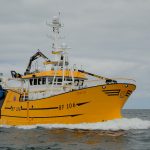
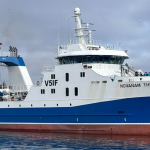
‘Trawling, when conducted responsibly, is indeed sustainable and an efficient method of fishing,’ Iván López said.
‘Without the use of trawl gear and associated sustainable practices, global food security would be in greater peril.’
He commented that bottom trawling accounts for more than one-quarter of all wild-caught seafood, equivalent to 213 billion meals annually – enough to feed 194 million people three times a day, more than the population of Bangladesh. ICFA’s position is that governments have a duty to recognise responsible bottom trawling as a sustainable practice and to reflect that in national and international policy frameworks. ICFA has released an updated Bottom Trawling Resolution.
Iván Lopez will be attending the conference and participating in two key side events. He will participate in the Sustainable fisheries: The role of trade from ocean to plate event, as well as in the Promoting the Role of Sustainable Food from the Ocean for Poverty Eradication and Food Security debate.