


The Federation of European Aquaculture Producers (FEAP) has issued a stark warning over the European Commission’s evaluation of the Common Fisheries Policy (CFP) Regulation 1380/2013.
While welcoming the Commission’s effort to assess the past decade, FEAP concludes that the evaluation is structurally biased against aquaculture, fails to draw necessary conclusions from clear evidence of stagnation, and offers no credible foundation for the upcoming 2040 Vision for Fisheries and Aquaculture.
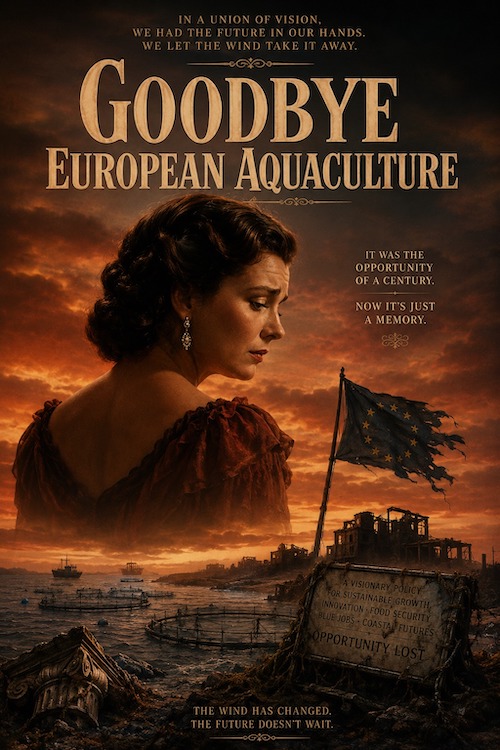
Despite the CFP’s explicit inclusion of aquaculture, the evaluation treats the sector as a marginal afterthought. It lacks a dedicated intervention logic, overlooks the direct link between EU aquaculture stagnation and declining EU food self‐sufficiency, and admits that key governance tools—Multi‐annual National Strategic Plans for Aquaculture (MNSPAs) and the Open Method of Coordination (OMC), have had only ‘limited impact’ on licensing and access to space.
‘The Commission’s evaluation identifies many of the problems but refuses to draw the necessary conclusions,’ said FEAP secretary general Javier Ojeda.
‘After more than a decade of voluntary cooperation with Member States, EU aquaculture has not grown. Our self-sufficiency in fishery and aquaculture products has fallen from 46.1% to 38.1%. For the five most consumed species, it is just 12%. The evaluation sees this but fails to connect the dots. Voluntary tools for Member States have failed. It is time for binding governance, harmonised standards, and a genuine commitment to strategic autonomy.’
FEAP’s analysis highlights eight critical failures, including the complete absence of common environmental indicators for aquaculture, the omission of climate adaptation as a binding requirement, and the incoherence with other EU policies such as the Nature Restoration Regulation and the Birds Directive, an omission FEAP calls ‘inexcusable.’
The federation also notes that the Commission itself admits it cannot quantify the costs of the OMC, nor assess the practical contribution of Member States’ environmental measures.
‘This is not an excuse,’ said Javier Ojeda. ‘It is a self‐inflicted failure of implementation.’
FEAP is calling on the European Commission, Parliament and Council to provide a coherent, aquaculture‐dedicated intervention logic in any future assessment, to replace non‐binding governance tools with binding mechanisms for licensing, space, and environmental reporting and to mandate Member States to develop and implement aquaculture‐specific climate adaptation plans.
In addition, it wants to see a binding Performance and Evaluation Framework with quantitative targets and the introduction of minimum harmonisation standards for aquaculture authorisation and operation, including an Aquaculture Sustainability Regulation and a Common Market Organisation for aquaculture products, as well as for an extension of Common Market Organisation mandatory information requirements to cover a greater share of products and out‐of‐home consumption, rebalancing the playing field against lower‐standard imports.
‘The 2040 Vision is a critical opportunity to correct decades of neglect,’ Javier Ojeda added.
‘The EU cannot claim strategic autonomy while importing billions of euros of farmed fish from Norway, China, Türkiye, and Latin America. Aquaculture is a strategic food‐producing sector. It must be governed as one, fully aligned with Article 39 of the Treaty on the Functioning of the European Union.’