




Up to 12 million tonnes of plastic enter our oceans every year and most of it doesn’t float. To tackle this issue, the EU has just set new limits on seafloor litter. The European Bottom Fishing Alliance (EBFA) has welcomed this initiative, highlighting the vital role of EU demersal fishers, who are actively helping to clear the seafloor of litter and make a real difference to the health of our oceans.
Numerous factors contribute to marine litter increase, such as poor waste management and public attitudes towards littering, of which 80% comes from land.
According to EBFA, fishermen are witnessing the growth of this problem at first hand, especially considering most of the data is available thanks to their collections during bottom trawling. The industry has already implemented substantial reductions and restrictive measures to allow the recovery of fish stocks, yet their livelihoods are increasingly threatened by growing external pressures such as marine pollution.
The European Commission has now, for the first time, set measurable thresholds for seabed litter in areas monitored through trawl surveys, no increase in litter is permitted, while in areas monitored visually, litter must not exceed one item per 1000m².
To meet the new thresholds, Member States must adopt appropriate measures within their marine strategies, as mandated by the Marine Strategy Framework Directive (MSFD).
EBFA welcomes these new limits, hoping they will help the decrease of marine pollution just as previous measures have done for EU coastlines, where litter has fallen by nearly one-third over the past five years.
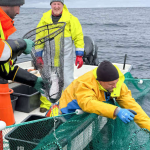
‘Fishers depend on healthy oceans to do their work. They are an active part of the solution, removing marine litter every time their gear crosses paths with it. Fishers are actively participating in specific projects such as Fishing for Litter that already collected more than 13 million kilograms,’ said Margot Angibaud of the EBFA Secretariat.
To encourage fishers’ role, EBFA calls on simplification to reduce administrative burden for those who generously contribute to marine litter removal.
‘They shouldn’t have to bear the cost of waste management but be properly incentivised and compensated for their efforts,’ EBFA states, adding that European institutions need to address the issue at the international level, in particular through ocean diplomacy in the ongoing plastics treaty negotiations.
‘This is crucial, considering that 88-95% of the global plastic load entering the seas comes from ten rivers, eight in the Asia and two in Africa.’