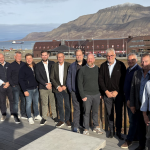






The European Bottom Fishing Alliance (EBFA) has welcomed the nuanced approach to bottom trawling within Marine Protected Areas (MPAs) taken by European Commissioner for Fisheries and Oceans Costas Kadis, and his remarks emphasising the importance of a science-based strategy to balance biodiversity conservation with sustainable fishing practices.
The Commissioner’s focus on tailored assessments and case-by-case evaluations, ensuring that decisions are driven by evidence rather than broad assumptions is seen as a positive step and in line with the rational approach long advocated by EBFA, to prevent disproportionate fishing area closures under current and new environmental legislation such as the Nature Restoration Law.
‘We commend Commissioner Kadis for taking a nuanced approach that balances the needs of biodiversity protection, sustainable fishing, coastal development and food autonomy. When properly managed and regulated, as it is the case in Europe, bottom trawling can coexist with biodiversity conservation objectives,’ said EBFA chair Iván López.
‘Not all protected areas are designated as strictly no-take or fully protected zones. In many cases, regulated bottom trawling is permitted within specific zones of MPAs where it does not conflict with conservation goals, and these allowances are based on extensive scientific assessments. For instance, some MPAs are design to protect birds that are not impacted by bottom trawling gears.’
As part of the EU’s broader commitment to the Oceans Pact and in line with the United Nations Ocean Conference (UNOC) objectives, Commissioner Kadis highlighted key priorities that align with the EBFA’s values – solid science, effective monitoring, enforcement and the provision of essential support to Member States. The Commission’s future plans to help Member States design and implement effective protected areas are a crucial step in ensuring biodiversity conservation while facilitating sustainable fisheries.
In his statement, Commissioner Kadis emphasized the crucial distinction between the EU Biodiversity Strategy for 2030, which is non-legally binding, and the Nature Restoration Law, which carries binding commitments. This differentiation is important, as it allows for a departure from previous unrealistic non-binding targets, such as a gradual phase out of active bottom fishing by 2030 or a complete closure of 10% of the EU’s seas to fishing.
According to EBFA, these targets lacked endorsement from the international community and related UN conventions.
The Commissioner further clarified that bottom trawling in MPAs should be considered based on an impact assessment for each specific area.
‘As a biologist, it depends on where the bottom trawling occurs and whether it has a negative impact on the targeted species, ecosystems and habitats in a particular area. When there is evidence of an impact, bottom trawling should not be allowed. However, when an impact assessment shows that there is no significant harm – for instance, in Natura 2000 areas that permit compatible activities – then bottom trawling should be allowed to continue,’ he said.