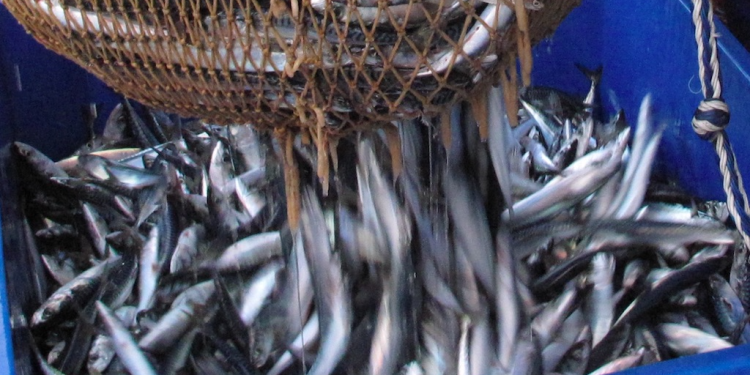




The mackerel TAC for 2027 has been agreed at 352,938 tonnes at a meeting of coastal states.
Representatives of governments and national industry bodies met in London this month to discuss this as a first step, as well as the infinitely more thorny issue of the distribution of this TAC between coastal states – the European Union, the Faroe Islands, Norway, Greenland, Iceland and the United Kingdom.
The TAC is in line with ICES recommendations and is an increase of just under 54,000 tonnes compared to the 2026 figures.
‘We have been concerned about the mackerel stock. Therefore, it is pleasing to see that things are now moving in a positive direction,’ said Norway’s Minister of Fisheries and the Oceans Marianne Sivertsen Næss.

‘However, the situation is still serious, so it is important that the stock is monitored closely. This is important to ensure that the stock reaches a more sustainable level and thereby ensure greater stability and increased profitability in the fishery. Our main goal remains to put in place a comprehensive agreement that includes all coastal states. This requires that all parties show both the will and the ability to find solutions.’
The Scottish Pelagic Fishermen’s Association (SPFA) has welcomed the outcome of the recent three Coastal States negotiations that have agreed TACs for 2027 for North-East Atlantic mackerel, Atlanto-Scandian herring and blue whiting, which are in accordance with ICES advice.
‘We are delighted that the Coastal States have signed the TAC agreements for all three fisheries in line with the ICES advice, which is great progress compared to the same period last year,’ said SPFA chief executive Ian Gatt.
‘There is still the major issue of resolving quota shares for mackerel, and this will be discussed by the relevant parties in early December.’
This is where the challenge lies, as in previous years coastal states have been quick to settle on a suitable figure for the mackerel TAC, but have consistently failed to reach agreement on how that TAC should be divided between the concerned nations. It remains to be see whether these traditionally brittle negotiations will come to an agreement, or if 2027 will bring the same clashes as in the past.
But there’s room for optimism.
‘There does, however, seem to be a more positive atmosphere and a clear willingness among Coastal States to reach an agreement,’ Ian Gatt said following a meeting the North East Atlantic Pelagic Industry Group on the fringes of the Coastal States meeting. This Group comprises pelagic fisheries representatives from the EU, Faroe islands, Iceland, Norway and the UK.