



The cod quota shared between Norway, Russia and some third countries increases next year by 14%. The Northeast Arctic cod quota agreed by the Joint Russian-Norwegian Fisheries Commission is set at 325,000 tonnes. Haddock and Greenland halibut quotas are also increased for next year.
‘This year’s negotiations have been challenging, and the listing of the two Russian shipping companies has also left its mark on the negotiations this year. Despite this, I am pleased that we have reached an agreement that will ensure sustainable management of the important fishing resources in the north,’ said Norway’s Minister of Fisheries and the Oceans Marianne Sivertsen Næss.
‘Fisheries resources in the Barents Sea are crucial for jobs and value creation along the coast. For 50 years, Norwegian-Russian fisheries cooperation has ensured sustainable and predictable management. This fisheries agreement means a lot to coastal communities, fishermen and Norway.
The overall cod quota is split between Norway, Russia and third countries according to the same lines as in previous years.
‘We traditionally hold this commission meeting ahead of the next fishing year. We determine the volumes allocated to Russia and Norway as part of joint stock management in the Barents and Norwegian Seas. For cod, we decided to increase the total allowable catch next year by 14%,’ said Ilya Shestakov, head of Russia’s Federal Agency for Fisheries.
‘For the first time in six years, we are seeing an increase in quotas for cod in the Barents Sea. This is very encouraging,’ Marianne Sivertsen Næss commented.
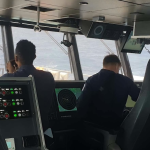
Following several years of online meetings between the parties, this year the Norwegian and Russian delegations met in person in Istanbul.
‘We are very pleased that this year’s agreement also contributes to continuing the stability in the quota distribution of fishery resources in the Barents Sea between Norway, Russia and third countries,’ stated Synnøve Liabø of Norwegian vessel owners’ federation Fiskebåt, which joined the Norwegian delegation.
The haddock quota is up 18% to 180,336 tonnes, Greenland halibut is set at 21,000 tonnes, an increase of 11% and the redfish quota is set at 67,090 tonnes, which is a reduction of 3% compared to the current year.
The parties have decided to keep capelin fishing in the Barents Sea closed until 2027. The decision is based on results from this year’s survey, which show very low capelin abundance.
Fiskebåt points out that Norwegian-Russian fisheries cooperation has been significantly scaled down in recent years, and this is seen as a very unfortunate development, represents a noticeable retrograde step.
‘The parties have now agreed to resume cooperation in several areas,’ Synnøve Liabø said, stressing that closer contact is crucial to strengthening the knowledge base and to creating a common understanding of the challenges associated with research, management, control and resource utilisation in shared sea areas.
The agreement was signed by Ministerial Councillor Mette I. Wikborg and Federal Agency for Fisheries Ilya Shestakov.
Image: Fiskebåt