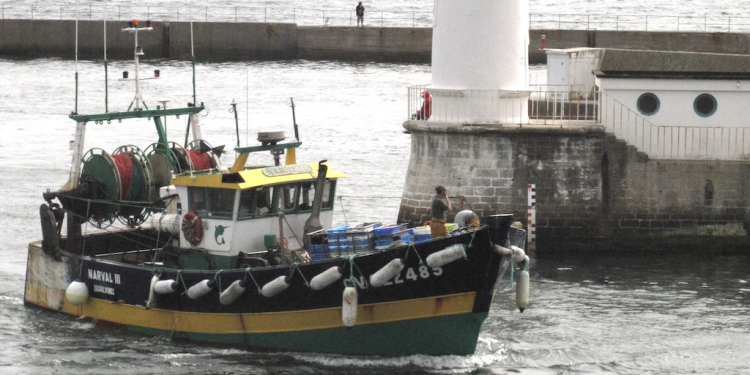





Representatives of the fishing industry in Brittany have been warning that sections of their fishing industry are set to collapse in the face of a lack of clear political will – as cuts recommended by ICES stand to make 2026 another tough year.
The alarm is being sounded to all relevant parties, starting with Minister Delegate for the Sea and Fisheries Catherine Chabaud, to ensure that key factors are properly taken into account during negotiations.
‘It is unacceptable for Brittany’s fishing sector to be dealt yet another blow. The economic and human cost would be heavy, dramatic, with irreversible repercussions for our social and political model,’ a committee representative stated.
There is distinct concern over the recommendation for a 77% cut in the TAC for mackerel, as well as the advice for gadoids and pollack in the Celtic Sea. In addition, there is concern for langoustine, eel and sole fisheries – which the Brittany fisheries committee states are species that the industry has taken steps to protect.
‘At the same time, the proposed increases for sea bass would be contrary to sound long-term management and the preservation of market balance,’ a committee representative stated, pointing out that fishing businesses have already been seriously affected by Brexit, offshore wind and MPAs, while there are also clear consequences of climate change on the movement of certain fish stocks, and rivalries outside the European Union that result from these changes.
‘We refuse to accept an increasingly precarious framework for discussions, especially given geopolitical pressures and environmental upheavals that demand the utmost caution,’ the Brittany committee stated.
‘These sudden and incessant fluctuations are unsustainable,’ stressed trawler owner Sébastien Le Prince, who also represents the Brittany fisheries committee.
‘By sticking to a strictly figures-based approach, the Commission’s proposals will only further cripple a Breton fishing industry already on the verge of collapse, given its commitment going back more than twenty years to a process of continuous improvement in fishing methods.’