



The warning by the North Atlantic Pelagic Advocacy Group (NAPA) that over a million tonnes of mackerel in excess of scientific advice has been caught over the past five years has been highlighted by the Irish Fish Producers Organisation (IFPO), which is pushing for an enforceable quota-sharing regime supported by effective management and controls – and based on real catches and sustainability, not inflated claims.
‘This is an extraordinary and overdue intervention from NAPA – the global marketplace for seafood is sounding the alarm,’ said IFPO chief executive Aodh O’Donnell.
‘Their message is clear. Norway, the Faroe Islands, Iceland and the Russian Federation have ignored science, inflated their quotas, and endangered the future of mackerel.’
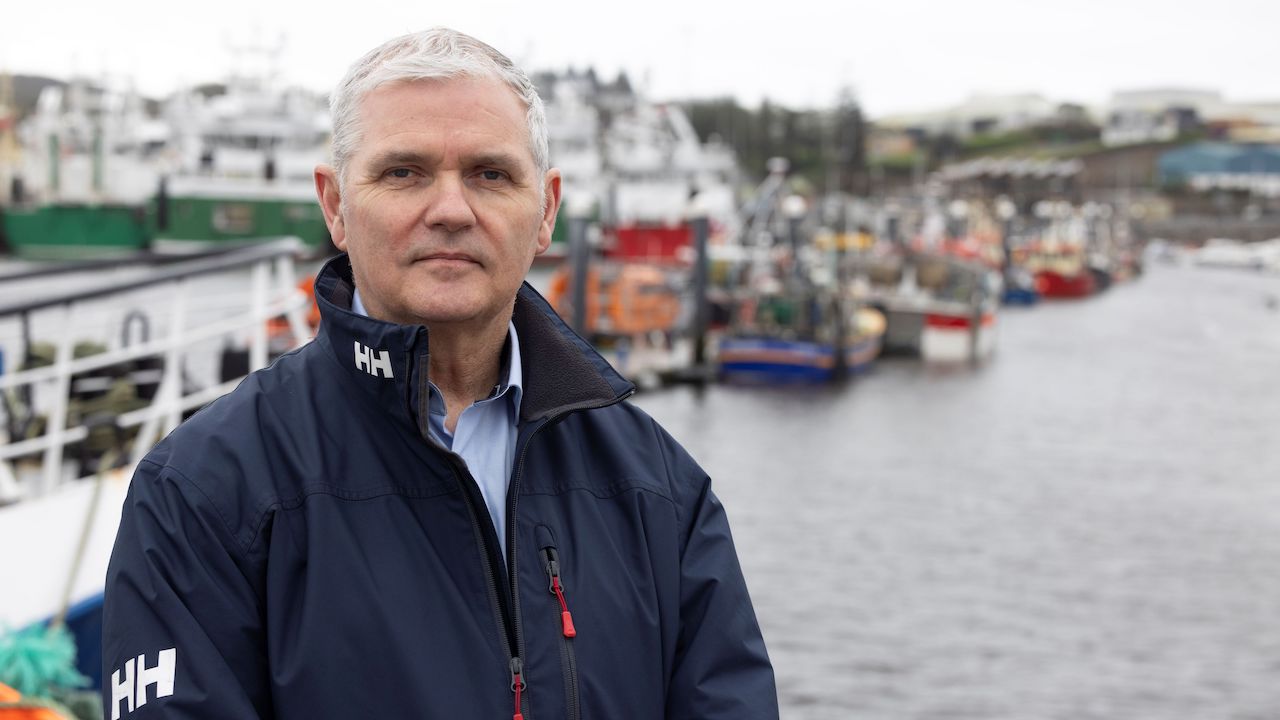
He commented that the NAPA figures underline the extreme imbalance between Ireland and the main Coastal States – Norway, Iceland, the Faroes and the Russian Federation.
‘In one week alone in 2023, Norwegian vessels caught over 40,000 tonnes of mackerel. That’s more than Ireland’s total allowable catch for the whole of 2025 and is almost four times our scientifically recommended annual quota for 2026. The contrast is shocking – and it also proves how unfairly Ireland is treated,’ he said.
‘Like NAPA, we have been warning about the EU’s need to stop overfishing shared migratory stocks for years. The numbers don’t lie. These countries have collectively taken a million tonnes more than recommended – with devastating consequences for the mackerel stock and for Ireland.’
The recommendation published a few dyas ago for a 70% reduction in the mackerel fishery in 2026 has sent shockwaves around the north-east Atlantic. This is alongside advice for substantial reductions also to quotas for blue whiting and boarfish.
For Ireland, it means the pelagic sector is facing an overall 50% reduction in next year’s quotas. For Ireland’s pelagic (offshore) fleet, this is an existential threat.
‘Modern vessels need a critical volume just to break even. They also rely on multiple species to spread financial risk. With massive cuts recommended across all three of the key species in Ireland, then no vessel can operate viably. This isn’t a downturn – it’s collapse,’ said Aodh O’Donnell, commenting that robust measures are needed, and the European Commission has failed to respond to the situation – even though it has acknowledged that the stock is in “critical condition” and warned that the 2027 advice could be for a total shutdown of the fishery.
‘The Commission calls for action – but takes none itself. Non-EU states won’t change voluntarily. Only trade sanctions and fishing access restrictions will stop them from plundering shared stocks,’ he said.
IFPO is now looking for a new working environment, with an enforceable quota-sharing regime supported by effective management and controls based on real catches and sustainability, as well as trade and access sanctions against non-EU states that refuse to comply, while also demanding the full application of Ireland’s Hague Preferences at the December EU Fisheries Council to protect Irish interests when quotas fall.
‘As guardians of the ocean we are fully committed to the long-term sustainability of our stocks and we cannot overstate the urgency,’ he said.
‘Ireland’s pelagic sector – worth hundreds of millions and vital to coastal communities – is on the edge of collapse. If the EU fails to act decisively now, we risk losing an entire industry within a year.’