





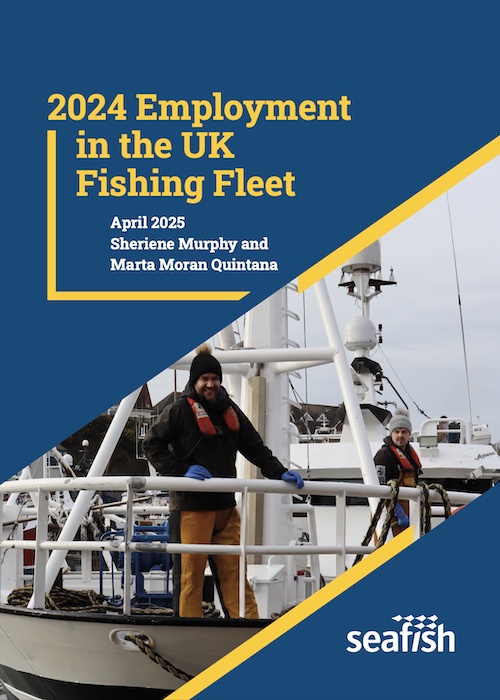
The Seafish 2024 Employment in the UK Fishing Fleet report provides in its snapshot of employment in UK commercial fishing demonstrating an ageing workforce combined with a shortage of skilled labour that has become an ongoing challenge for the industry.
Data gathered during the annual fleet survey last summer shows that the average age is now 44 – four years older than the average in the 2021 employment report, while English fishing vessels are shown to have the largest proportion of crew aged over sixty, the majority of whom are largely owners working on static gear under 10m and low activity vessels.

The Seafish report states that fewer than a quarter of skippers and vessel owners interviewed at that time rated access to skilled labour as ‘good’ or ‘very good’, while nearly half rated it as ‘bad’ or ‘very bad’.
The fleet sectors most heavily affected by recruitment challenges are over 10-metre scallop dredgers and demersal trawlers fishing for nephrons and groundfish. Vessel operators reported that these issues are adversely affecting days at sea and fishing activity.
‘As this new report recognises, access to skilled labour is an ongoing issue for the commercial fishing sector. This issue is critical as the shortage of labour has economic implications for both businesses and the wider economy,’ commented Seafish head of industry workforce issues Neil McAleese.
 ‘The industry continues to experience a decline in full-time employees due to an ageing workforce, insufficient domestic entrants, and changes in the skilled worker visa policy affecting the viability of recruiting migrant workers. Those within the industry understand the difficult challenges that fishermen are facing and are working together to identify solutions. We are working in partnership with industry stakeholders and government to find solutions to these challenges.’
The report cites reasons for difficulties in finding local crew as including competition with other industries, such as offshore wind and aquaculture, often seen as the main competitors for attracting new entrants. For some vessel operators the recent changes to the visa system have made it more difficult and more costly to recruit skilled crew from overseas.
The report presents data on nationality, age, gender, professional qualifications, work and remuneration patterns of workers in the UK catching sector. Skippers and vessels owners were interviewed and asked about their access to skilled labour, their business performance in the last year and, their expectations for the future.
The 2024 survey sampled a larger proportion of the UK’s small-scale fleet of vessels (vessels under 10m and low activity) than in previous years and this may have influenced the findings including the proportion of UK workers amongst the sampled vessels.
The Seafish 2024 Employment in the UK Fishing Fleet report is available here.