




During three years of research, the LINC BioMer project developed more than forty formulations for marine-biodegradable and non-ecotoxic trawl netting, before coming up with a variant for testing at sea.
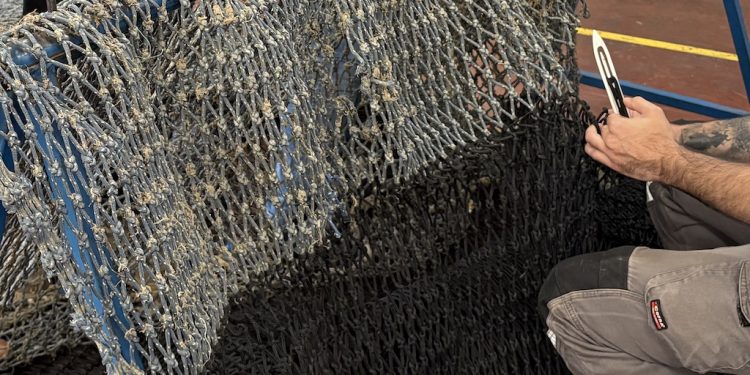
The first net panels made in this new biodegradeable netting are now on board Scapêche trawler Manathia for testing under commercial conditions.

The LINC BioMer project was initiated by French fishing gear company Le Drezen and in 2024 this was structured formally under the leadership of Coopération Maritime. During three years of research, ComposiTIC, a technical facility at the University of South Brittany specialising in the formulation and processing of innovative composites, developed 40 molecular formulations from scratch and tested them as part of its R&D efforts. A final formulation was selected for this eco-designed material.
Prototypes of monofilaments and braids were then manufactured and subjected to various mechanical, thermal, and abrasion tests. The results have marked a crucial first milestone in securing a material that meets eco-design objectives while possessing the characteristics required for processing into fishing gear.
In parallel, the teams are continuing aging tests to evaluate the material’s biodegradation process and are investigating trawl wear to identify the areas subject to the greatest mechanical stress.
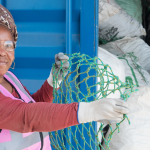
Following formulation, prototyping and R&D testing, the material has now reached the industrial processing stage, with the production of monofilaments. Taking this innovative process from the laboratory to the net loft, the first trawl netting sections made from the eco-designed material were then manufactured by Le Drezen.
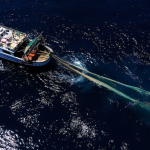
The LINC BioMer netting has now been incorporated into the trawl gear of Scapêche’s 16-metre langoustine trawler Manathia for testing at sea.