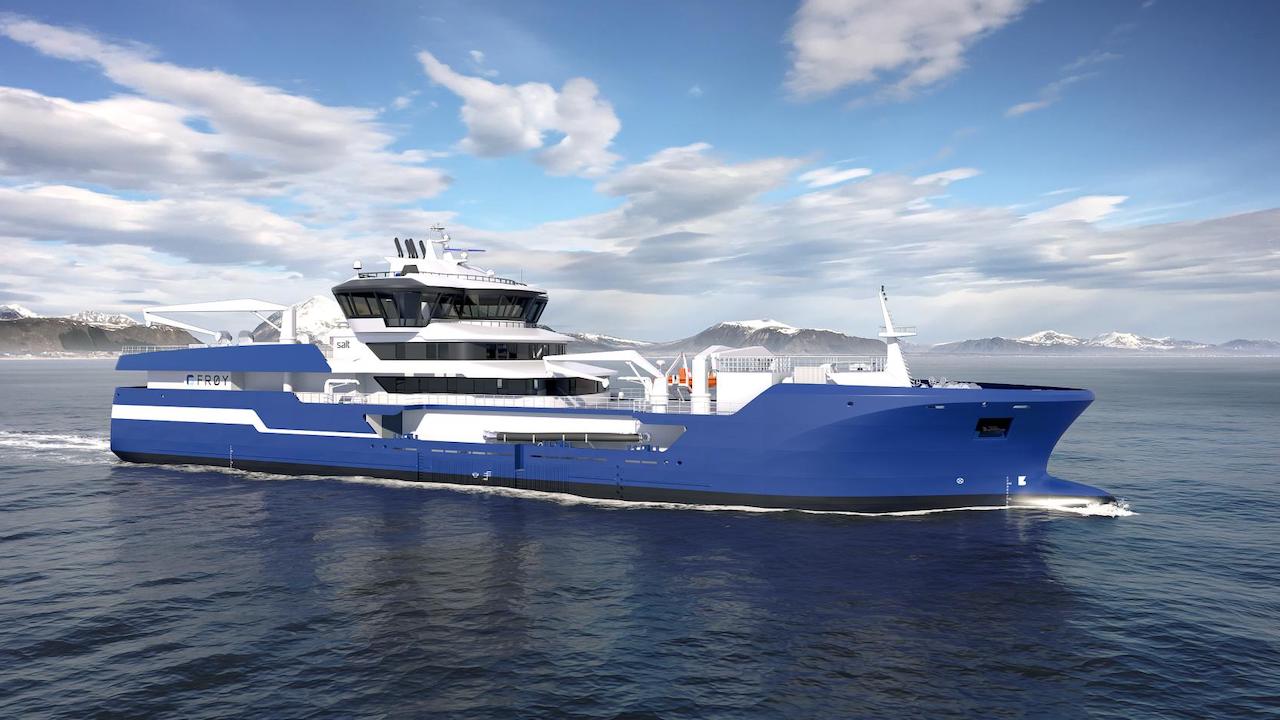
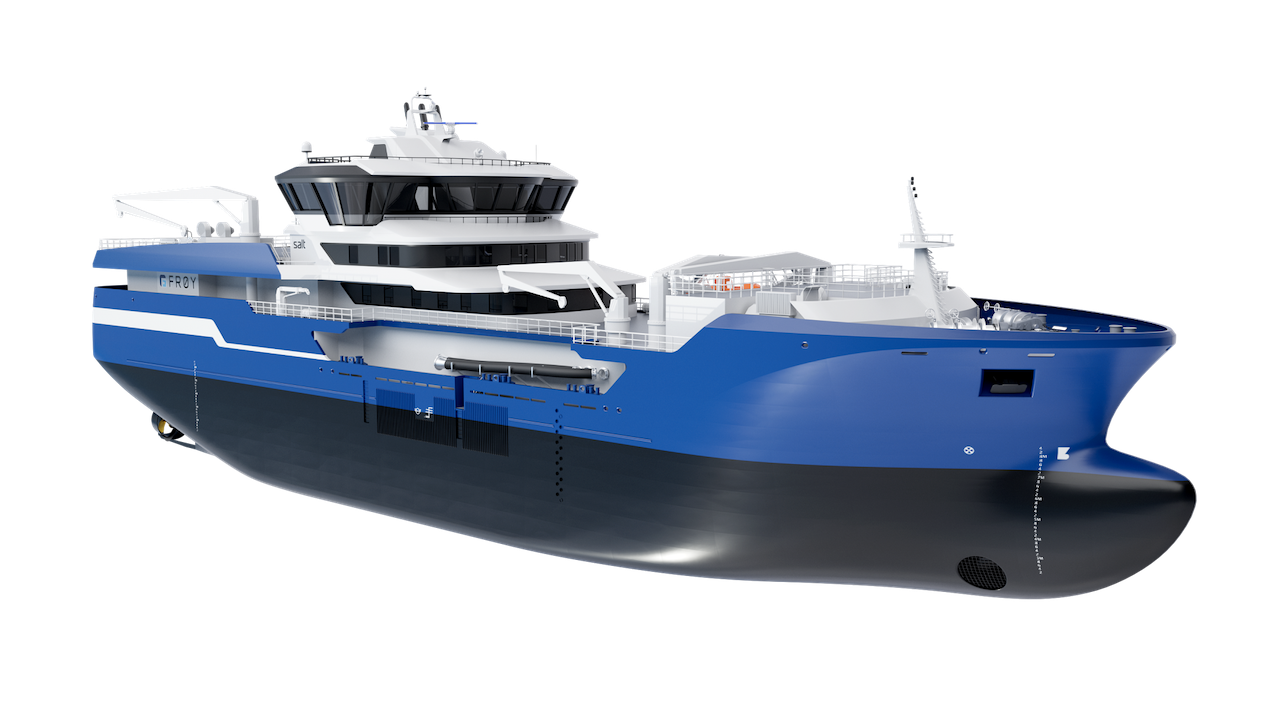
Norwegian operator Frøy AS has signed a contract with the Murueta Shipyard in Northern Spain for the construction of a groundbreaking wellboat that aims to set the standard for the aquaculture vessel of the future.
Frøy’s new wellboat is designed to meet future requirements from customers and authorities. Improved fish welfare, biosecurity and energy efficiency have been the drivers in the design process. Modular and smart solutions enable this vessel to be easily adapted to integrate future technology.
‘We work in an industry where new technologies and solutions are in continuous development. With this vessel, we are at the forefront, and have the opportunity to adapt to important innovations on an ongoing basis. Frøy aims to constantly deliver the best wellboat service on the market, so that we do our part to ensure growth for the aquaculture industry,’ said Frøy CEO Tonje Foss.
The new vessel is expected to be delivered in the second half of 2027. The 87.70-metre, 20.60-metre breadth fish carrier is designed to have a 4500 cubic metre cargo carrying capacity and a fish handling installation from MMC First Process.
‘In the development of this vessel, we have taken significantly greater ownership of design and functionality than before. Every design choice has been made with a holistic approach and with a strong focus on optimisation in all aspects,’ commented Frøy’s CTO Kristian Reiten.
The wellboat will contain a number of innovative systems to improve both fish welfare and biosecurity.
‘A key technology choice is the new well circulation system, which is far more energy efficient than traditional systems. By reducing the amount of pipes, optimising pipe runs, and reducing ift height, Frøy has managed to combine better water quality for the fish with lower energy consumption,’ Kristian Reiten explained.
The newbuild is prepared for future energy sources, with a modular design that can be adapted to both hybrid technology and alternative fuel systems.
‘We have prioritised a data-driven approach to achieve lower emissions and more energy-efficient operations. Analysis of data from our existing vessels under different operating conditions has helped us choose the most optimal solutions,’ he said.
To this is added a strong emphasis on high cybersecurity. The vessel will be the first in the world with the DNV notation Cyber Secure (+), which ensures a high level of IT security. It will also have the DNV notation Fish Carrier (Live) and DP1 notation for dynamic positioning.
‘An important factor we must take into account is security in the IT sector, as well as documentation of fish welfare, energy consumption and sustainability requirements. We believe that by offering such services throughout the entire process – from design and construction to operation – we will add extra value to our customers,’ he said.