



New Zealand seafood group Sanford has posted its 2025 full year figures, with revenue up 0.2% on the prior comparative period (pcp), while net profit after tax is up 223.8% – with a warning that there’s no guarantee this strong performance will be repeated a year on.
The group’s aquaculture activities, salmon and mussel farming, have both exceeded expectations, while the wildcatch side of the business has fallen short.
‘I have carried out an initial high-level review of our aquaculture businesses (salmon and mussels) with a clearer understanding of what is needed to build a platform for growth,’ commented Sanford managing director David Mair.
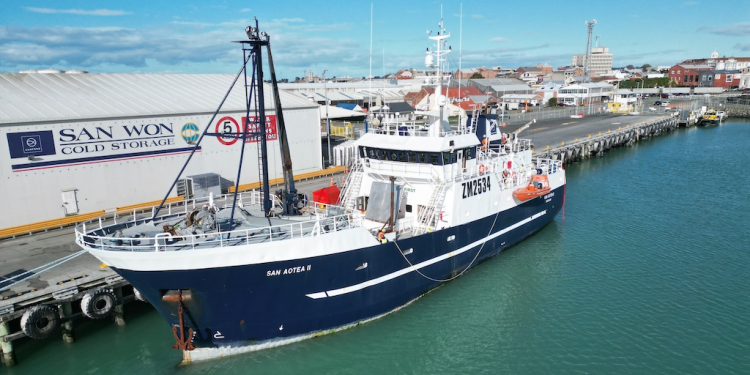
‘Wildcatch includes our inshore business, our deepwater fleet and factory in Timaru, and our fishing partners. We have been separating out each value stream to understand its profitability and capital requirements,’ he said, commenting that wildcatch performance will be a focus for FY26.
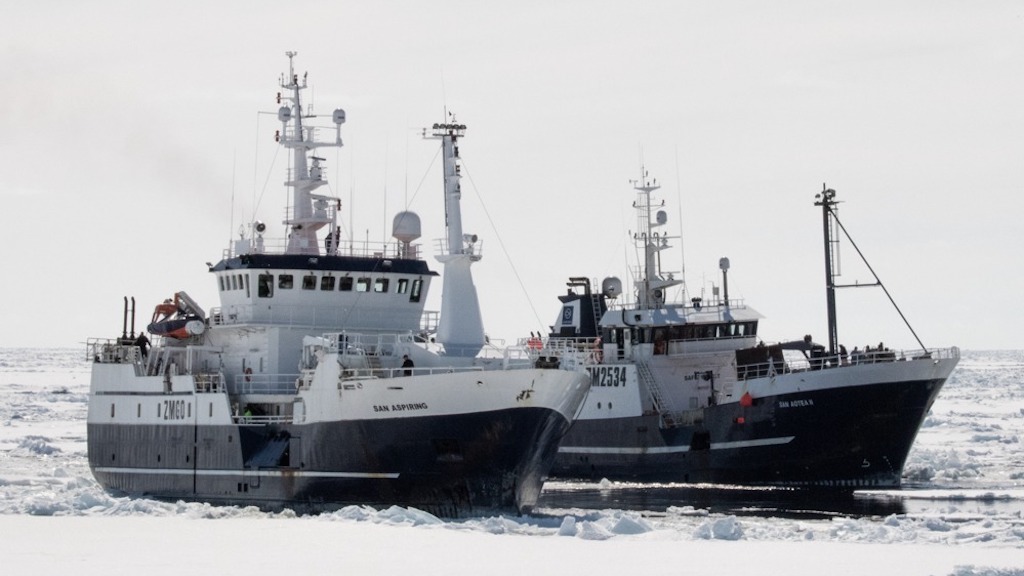
Sanford reports that its wildcatch business delivered a 5.9% reduction in profitability from flat revenue. While inshore ACE trading model delivered to expectations, there has been reduced pricing on scampi, a key species for us. This is a high-value product and the softening price, along with demand, reflects restrained discretionary spend in a subdued Chinese economy. The company’s fishing partners delivered an improved profit performance with particularly strong catch volumes of squid and barracouta.
‘I am pleased to report to Shareholders on an excellent result for the 2025 financial year (FY25),’ David Mair said.
‘Revenue reached $584.1m, adjusted earnings before interest and tax (adjusted EBIT) was $105.2m, EBIT was $102.1m and net profit after tax $63.7m. More importantly, operating cashflow of $135.3m and disciplined capital investment of $23.3m not only maintained assets but enabled significant debt reduction of $92.1m from $185.5m to $93.4m. These are all record results.’
He pointed out that Sanford has delivered an improved performance for FY25 – and the company operates in a commodity market and is at the mercy of supply and demand from market forces. The company states that several of the key contributors to this year’s result were factors outside of Sanford’s control, warning that while always striving for performance improvements, it should not be assumed that this year’s financial result will be repeated.
‘The worldwide demand for protein continues to increase and provides tailwinds for Sanford. Ongoing global turbulence in markets and the emergence of trading blocs continue apace. This means we need to review the markets we operate in. Sanford has become concentrated in several large traditional markets, particularly China and the US. China is, and will continue to be, a key market for our company,’ David Mair said.
‘The US will remain more challenging. We must create a broader market scope for our products, then develop, maintain and enhance our interactions with key customers in those markets.”