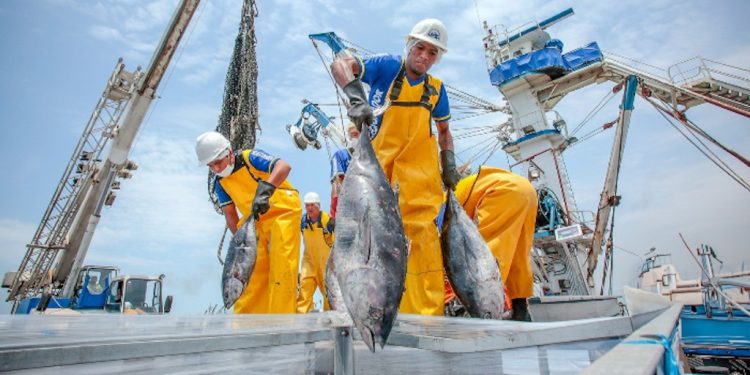





Peru’s Ministry of Production, responsible for fisheries, presented the policy that will transform the national fishing sector through regulation, technological innovation, and improved marketing of marine products. This has now been formalised as the National Fisheries Policy to 2040.
This is a roadmap that is intended to strengthen resource sustainability, modernise fishing infrastructure, boost coastal and Amazonian economies, and make more seafood products available to domestic consumers. As a long-term strategic instrument, this seeks to comprehensively transform fishing activity, making it more competitive, sustainable, and inclusive.

Three key pillars are to strengthen the sustainable use of resources through evidence-based scientific management, improvements in surveillance and control, product traceability, technical training for artisanal fishers, and strengthening the national fleet outside the 200-mile limit, to increase production by modernising artisanal fishing landing sites (DPAs), strengthening infrastructure, expanding the cold chain, and promoting technological innovation to improve productivity throughout the value chain, and to improve the marketing of fishery products nationally and internationally promoting training in commercial management, distribution logistics, and storage, which will enable the delivery of more quality products – including to districts that currently have limited access.
‘This policy recognises fishing as a strategic activity that connects the economy, food, and the lives of our coastal communities. We’re not just talking about an fishing activity; we’re talking about opportunities for thousands of Peruvians,’ said Deputy Minister of Fisheries and Aquaculture Jesús Barrientos.
With the implementation of this policy, the fishing sector is projected to increase its contribution from 0.75% to 1.29% of the national GDP and generate more than 440,000 direct and indirect jobs.
Furthermore, it is estimated that it will boost the economy with an additional US$467 million per year in foreign currency, directly benefiting coastal and Amazonian communities.
The modernisation of artisanal fishing landing sites (AFS) is also prioritised, and the strategy promotes investment in technological innovation and monitoring systems, designed to increase fishermen’s productivity by between 8% and 12% through more selective fishing methods with a lower ecological impact.
‘With this policy, we will protect our first five miles, improve fishing infrastructure, promote technology, and dignify the work of our fishermen. It is a forward-looking policy with concrete results for those who depend on the sea,’ Jesús Barrientos said.