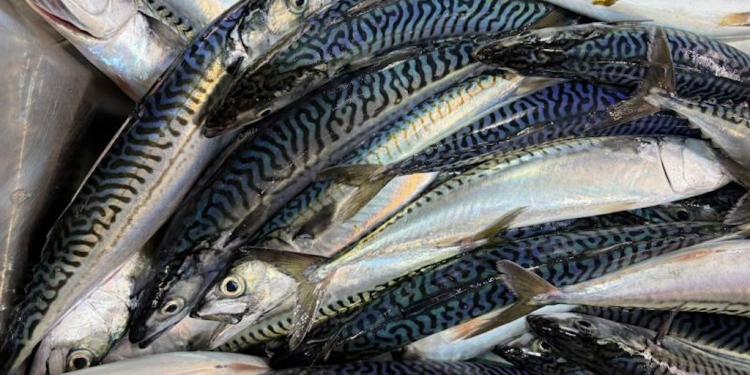





NOAA Fisheries is partnering with the US Northeast fishing industry to collect management-relevant data on mackerel population dynamics using advanced technology. This initiative will receive $2.3 million in the current fiscal year.
The project will engage more than 50 fishing vessels to collect and analyse data to improve understanding of the Atlantic mackerel stock. Fishing vessels will be involved in developing acoustic technologies to detect and quantify mackerel, collecting mackerel samples for biological analysis, tagging mackerel to understand movement between US and Canadian waters, participating in mackerel egg surveys to better understand spawning, and developing and testing hypotheses about the ecosystem drivers of mackerel.
This research initiative builds upon the Northeast Fisheries Science Center’s 20-year model of success with cooperative research. This research includes working with the fishing industry to identify research needs, collect data, and support sustainable management of resource species.
‘Cooperative research is critical because it brings to bear the combined knowledge of fishermen and scientists. This allows us to make smarter management decisions,’ said NOAA Fisheries assistant administrator Eugenio Piñeiro Soler.
This study will investigate industry observations of increasing abundance after a previous decline in spawning stock biomass. Atlantic mackerel is most widely distributed and often observed by the fishing fleet in the winter and early spring, which results in limited overlap with fisheries surveys. Developing new tools to measure mackerel biomass using advanced acoustic technologies and analytical methods is an important component of this research.
This new research initiative aims to address key uncertainties in the Atlantic mackerel stock assessment to improve understanding of the resource and management of the fishery. This study will also characterise the spawning seasonality of Atlantic mackerel on the US continental shelf and advance our understanding of ecosystem drivers of mackerel abundance.
The Atlantic mackerel fishery is worth up to $23 million and mackerel are an ecologically important fish, but there has been limited research on the population dynamics of this valuable species. The initiative is seen as an opportunity for the fishing and science communities to work together to advance the tools available to monitor, understand, and manage this important resource.