Protecting stocks amid rising fishing tourism
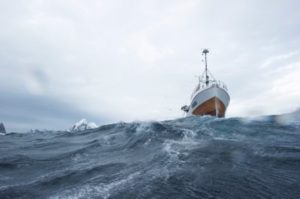
Rising fishing tourism poses great threat to the coastal stocks but creats new opportunities of income for the fishermen.



Rising fishing tourism poses great threat to the coastal stocks but creats new opportunities of income for the fishermen.
The Norwegian Seafood Export Council (NSEC) has now gained MSC certification for all Norwegian North East Arctic cod and haddock fisheries. With the successful completion of their MSC assessments, in 2012 an expected total of 340,000MT of Norwegian cod and 153,000MT of Norwegian haddock will be eligible to use the MSC Eco-label.
In October, salmon to the value of NOK 2.2 billion was exported, a reduction of NOK 756 million compared with the same month last year. At the same time, the volume increased by 10 per cent to almost 84,000 tonnes. So far this year, salmon exports have reached NOK 24 billion, a reduction of NOK 800 million compared with the previous year. At the same time, a volume of 766,000 tonnes was exported. This represents an increase of 27,000 tonnes.
Pelagic fish exports totalled NOK 1.7 billion in October 2011, representing an increase of NOK 407 million or 32% compared with October 2010. For herring, we can see an increase in export value of 29% up to NOK 487 million, while for mackerel there was an increase of 36% to NOK 1.1 billion.
Seafood worth almost NOK 5.5 billion was exported in October. This represents a downturn of NOK 345 million or 6% compared with the same month last year. So far this year, seafood exports have been worth NOK 43.3 billion, an increase of NOK 362 million on the record year of 2010, according to figures from the Norwegian Seafood Export Council.
Norway exported cod, including clipfish, saltfish and dried fish worth NOK 1.22 billion in October. This represents an increase of 4% or NOK 51.8 million compared with the same month in 2010. Measured in terms of volume, exports increased by 1% or 393 tonnes to a total of 40,400 tonnes, according to figures from the Norwegian Seafood Export Council.
”The commercial feeds sold today, with a high content of vegetable raw ingredients, do not produce salmon with heart problems”, Grethe Rosenlund, Senior Researcher at Skretting recently said in an intervju with the Norwegian netsite Kyst.no. She believes the findings Nifes recently published on its website are not valid for today’s commercial fish feed.
“Norway has Europe’s largest stocks of kelp; one estimate is 50 million tons. Kelp has extremely good growing conditions along Norways cold coastline. Global energy needs are expected to increase by 100 percent by 2050. The question is if kelp could be a source of sustainable bio-energy in the future? If so, Norway should be in a good position to act as host country for this industry,” Lisbeth Berg-Hansen, Norwegian Minister of Fisheries and Coastal Affairs, said today when she opened the seminar “Kelp – green energy from the ocean”
No samples exceeded the upper limits for undesirable substances.
Following an evaluation of the fleet by a committee of stakeholders and international scientists the Institute of Marine Research (IMR) has been advised to maintain its Reference Fleet. The committee also suggested a range of measures to strengthen and promote this project, which is based on the mutual trust between fishers and scientists.