




With the Bay of Biscay closed to practically all fishing activity for the third consecutive year, France’s largest PO Pecheurs de Bretagne argues that it’s time to look forward to a reopening in 2027 and uninterrupted fishing through the winter.
The closure has been in place furing January-February in 2024, 2025 and 2026 as a meaasure designed to protect marine mammals.

Pecheurs de Bretagne states that there are compelling reason for re-examining the rational behind the closure, and for these fishing grounds to remain open next winter, as the industry sone 2017 has been fully committed to programmes aimed at limiting and better understanding the interactions between fishing gear and marine mammals. PIC, LICADO, PIFIL, DOLPHIN FREE, DELMOGES.
‘All these scientific programmes have grown significantly thanks to the direct involvement of professionals. Fishermen didn’t hide away; they took action, a Pecheurs de Bretagne representative said, commenting that according to the recent DELMOGES project report, the increase in interactions between fishermen and dolphins is primarily linked to climate change.
‘Specifically, this is due to trophic disruptions altering the distribution of small pelagic fish, the cetaceans’ prey, which are now approaching coastlines. Fishermen have neither increased their fishing effort nor changed their practices,’ the PO states.
‘In its latest report on the impact of the Bay of Biscay closure, PELAGIS estimates the average annual bycatch at 4,700 for the winter periods of 2017-2023. This represents a 23% decrease compared to its previous estimates, and more than 50% compared to the figure of 10,000 that was cited to support the Council of State’s decision. The report also shows that catches had already begun to decline before the closure was implemented.’
The industry points out that the common dolphin population in the Bay of Biscay has been stable for several years, referring to the conclusions of the SCANS IV assessment campaign.
‘Without calling into question the objective of protecting cetaceans, this data must be taken into account,’ Pecheurs de Bretagne’s representative stated.
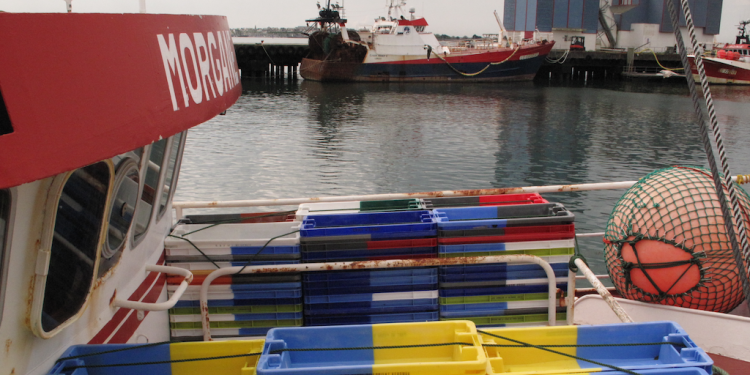
‘Approximately 300 vessels remain in port, disrupting an entire value chain – fish markets, ports, wholesalers, fishmongers, and supermarkets. With each closure, government compensation amounts to around €20 million, which doesn’t cover the actual cost of the closure, estimated at €35 million,’ he said.
‘This significant financial windfall could be used more effectively – for fleet renewal, training, innovation, and more…’
Pecheurs de Bretagne states that the majority of vessels affected by the closure are equipped with pingers, acoustic beacons, or onboard cameras.
‘These tools must be tested, proven, and improved in real-world conditions, precisely when the risk is highest,’ the industry spokesman points out.
‘Prohibiting all activity during this period prevents observation of their effectiveness, delays understanding the interactions, and wastes valuable time in the search for sustainable solutions. This approach is neither sustainable nor effective in the long term.’