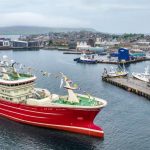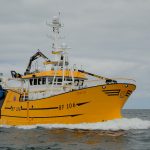






After a hundred years of spawning migration to the Møre area off western Norway, the world’s largest herring stock suddenly decided in 2021 to shift waters off Lofoten, near to its wintering grounds, and has been spawning there ever since.
Researchers now fee that they know the reason for this unexpected move and are looking at overfishing of Atlanto-Scandian herring between 2017 and 2022.
‘There were too few older fish left to show the young herring where to spawn. The new generation had to improvise,’ says marine scientist Aril Slotte and lead author of the study that has been published in Nature.
The fishery was particularly targeted at the older fish. At the same time, a large generation of herring from 2016 reached sexual maturity.
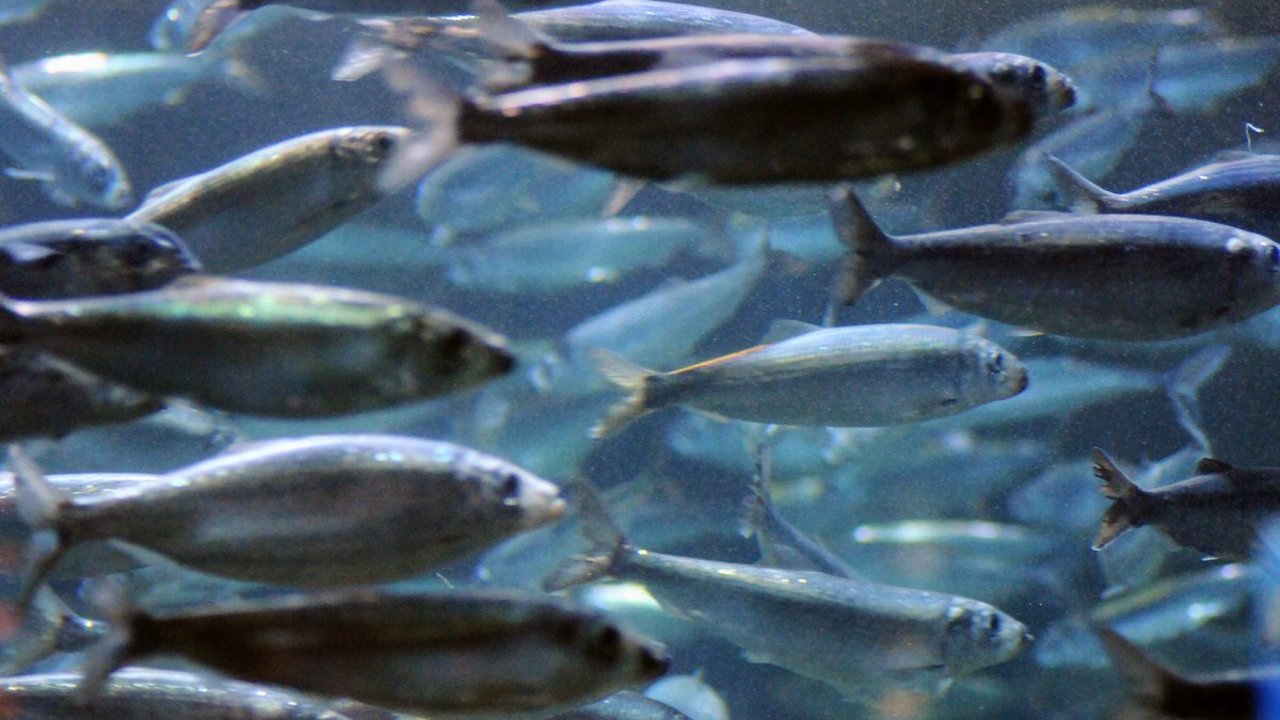
The study is based on a theory that schooling fish are led by individuals with long experience. Newcomers depend on the transfer of expertise from these ‘guru’ fish.
‘When we selectively fish for the oldest individuals, we remove collective knowledge from the population,’ Aril Slotte said.
‘If more older herring had survived, spawning would probably have continued on the Møre grounds.’
Between 2016 and 2023, researchers from the Institute of Marine Research tagged 200,000 herring during overwintering in Troms. These are registered upon recapture and delivery to fish reception centres in Norway and Iceland.
The tag data confirms that the remaining ‘old herring’ continued to spawn off Møre, but stopped when the 2016 year class became the majority in the spawning population after 2020. Older fish followed the herd to the new spawning grounds in Lofoten.
‘The most important thing for the herring is the collective. Being left alone is not an option. They have to follow the shoal even if it goes in an unfamiliar direction,’ Aril Slotte said.
This may also explain why herring sometimes mistakenly migrate to other stocks, as the researchers have also documented in the study. All the indications are that the Møre area is a more favorable breeding area for herring – so the herring stock may not thrive as well in the long term when it spawns further north.
The researchers believe the results indicate that there may be a need to rethink management of the herring stock.
Today, quotas are set for the number of tonnes of herring. Larger and older fish have a greater market value and are therefore fished more targetedly. They migrate further, and are also fished by other nations outside Norwegian waters.
‘We have now shown how important the older fish can be for the population’s collective consciousness and cultural heritage. A natural follow-up would be to investigate quota advice that takes into account the herring’s age structure,’ he said.
‘If, when we get a new super year class, things could come into play again. When the population increases, the herring tend to spread out over larger areas to spawn. Then the herring could seek better conditions off Møre again,’ said Aril Slotte.
But it can be a long time between the very large herring year classes. Herring that hatched in 2016 still dominate the stock, accounting for over half of all adult herring.
‘We have hopes for the herring that hatched in 2022, which will become sexually mature during 2026-2027. We are watching with excitement,’ he concludes.