
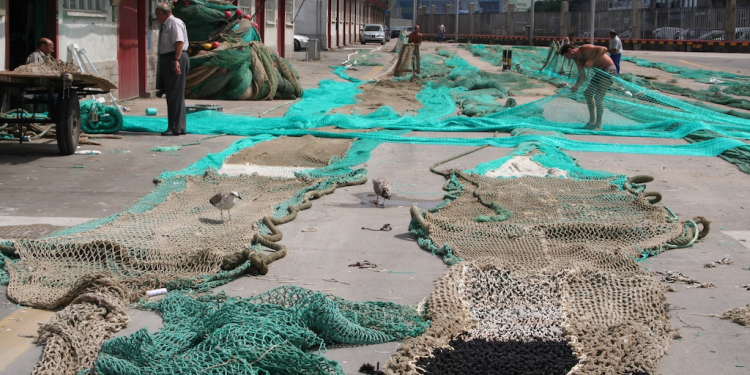





Building on the original Redes de España (Nets of Spain) pilot initiative to develop routes to recycle end-of-life fishing gear for other purposes, the Redes de España II project is now being kicked off, co-financed by the European Union through the European Maritime, Fisheries and Aquaculture Fund.
It aims to promote a management system for discarded fishing nets and gear and accelerate their return to the circular economy. Behind the initiative are the Spanish Confederation of Fisheries (CEPESCA), together with the Automotive Technology Center of Galicia (CTAG) and the National Federation of Fishermen’s Associations (FNCP). This project has been developed in collaboration with the Biodiversity Foundation of the Ministry for Ecological Transition and the Demographic Challenge, through the Pleamar Programme.
One of the main new features of this second phase is the inclusion of RENET , a digital tool that allows users to request collections, view collection points and apply digital traceability from the origin to the final destination of each component, also making it easier for recyclers and operators to access valuable materials through a specific gateway.
Redes de España II anticipates the entry into force of the Extended Producer Responsibility (EPR), with sector workshops and bilateral meetings with manufacturers, as well as information sessions for vessel operators to promote adherence to the system and the deployment of agreements with ports and organisations.
The project includes technical tests to assess the feasibility of reusing materials from discarded fishing gear in the manufacture of new sustainable nets and gear , moving towards a ‘closed loop’ model that reduces the use of virgin raw materials and the final non-recoverable destination.
Within this framework, meetings will be held with producers of fishing net components to analyze the materials and technical characteristics of the components used, in order to identify viable alternatives and technical requirements that facilitate the incorporation of recycled, recyclable or biocompatible material in new designs.
‘Our participation in Redes de España II will allow us to further strengthen CTAG’s role as a technological partner in the transition to a circular economy, applying our capabilities in materials processing and characterization to promote real and innovative alternatives that will advance recycling,’ said Raquel Lede Bañobre, head of the Product and Materials Innovation Department at CTAG.
‘This new phase gives us the opportunity to continue working alongside the fishing sector, supporting the evaluation of new possibilities for reusing materials applicable to nets and fishing gear, and reinforcing our commitment to sustainable solutions.’
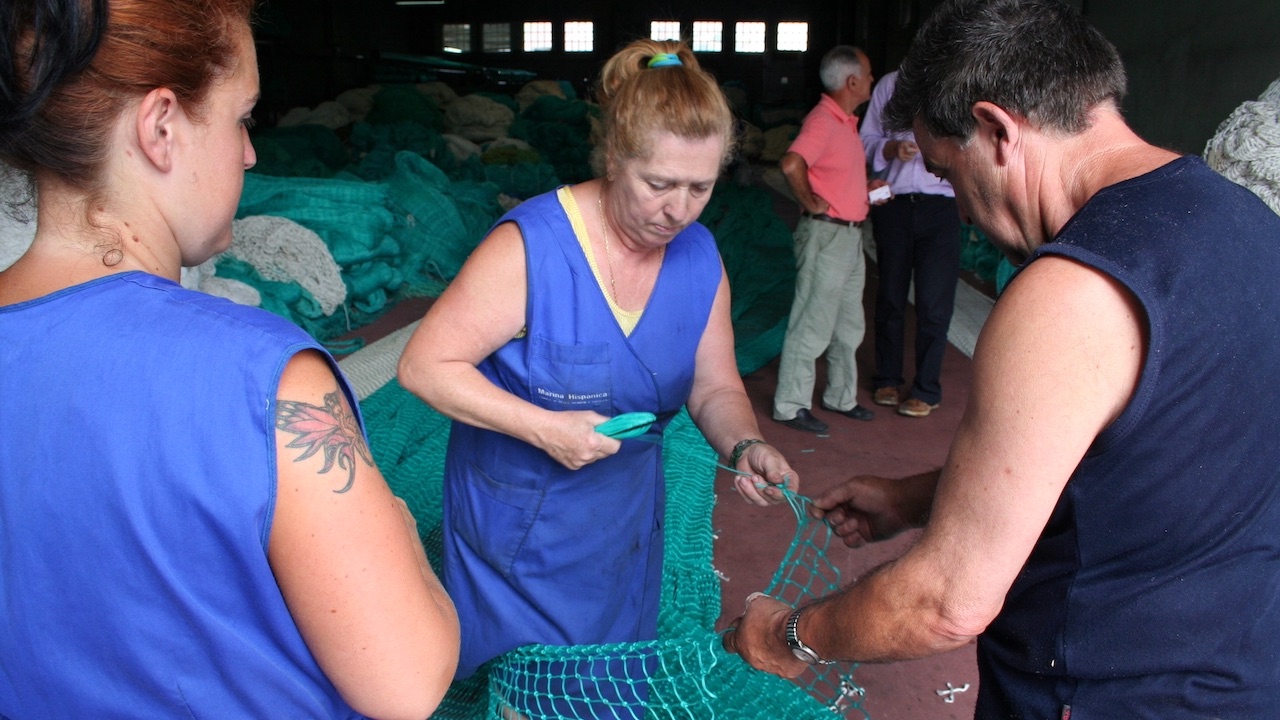
In addition to the environmental and industrial aspects, the project has a social dimension with outreach and promotion activities related to the making and repair of nets and fishing gear, with a focus on inclusion and a gender perspective, and with the participation of social organisations.
‘The participation of the National Federation of Fishermen’s Guilds in Redes de España II aims to bring the value of the knowledge surrounding artisanal fishing nets closer to the public, from the perspective of the fishing sector, focusing on net makers and fishers as active participants in the solution,’ commented FNCP president Basilio Otero.
‘Through demonstration workshops, dialogue sessions, and a traveling exhibition, we showcase how traditional knowledge allows us to identify, classify, and give a second life to nets and gear, fostering a fairer and more conscious view of the fishing sector’s role in reuse and recycling processes.’
CEPESCA, CTAG and FNCP have already held their first coordination meeting to define the initial steps of Redes de España II, agree on the initial work schedule, assign responsibilities and activate priority actions related to the deployment of RENET, traceability and the planning of technical and outreach activities.
‘With Redes de España II we are taking a decisive step to turn a challenge into a real opportunity for innovation and circular economy, relying on digitalization and collaboration across the entire value chain to ensure traceability, valorization and scaling of the system,’ said CEPESCA secretary general Javier Garat.