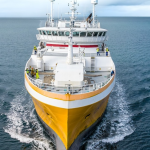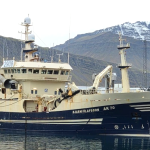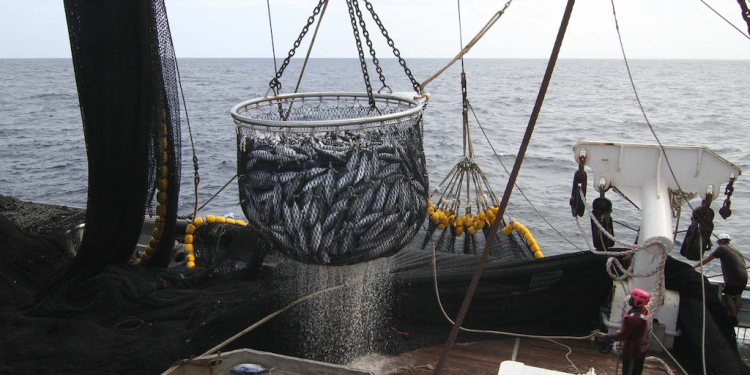





The adoption of a management framework for Indian Oceam yellowfin tuna at the IOTC plenary meeting has been welcomed by Orthongel, representing French tropical tuna operators. Eleven vessels from the fishing companies affiliated with Orthongel – CFTO and Sapmer – are directly affected by these negotiations.
With the recovery of the Indian Ocean albacore stock having been confirmed by the IOTC Scientific Committee, the Contracting and Cooperating Parties (CPCs) had an opportunity this year to transform the recovery plan in force since 2016 into a management plan better suited to the stock’s now healthy status.
‘The main objective has been achieved: our members’ fishing opportunities have been consolidated and the replacement of a support vessel, which had not been provided for until now, is now a reasonable prospect. We would, of course, have liked to secure an increase, even a symbolic one, in our quota in return for the efforts made by the fleet,‘ said Orthongel president Xavier Leduc.
‘However, without this final effort on the part of the European Union, which had to relax its negotiating mandate, it would have been impossible to meet the aspirations of developing CPCs and to bring back on board those CPCs that had raised objections. The flexibility measures introduced into the management plan will, however, enable fishing companies to optimise their quota utilisation.’
The management plan sets a TAC of 436,867 tonnes for 2027 and 2028, which preserves the quotas of the fisheries that have contributed most to the stock’s recovery, including the European Union, which has reduced its catches by 21% in recent years, whilst allowing new fishing opportunities to be opened up for developing coastal states.
It also allows the four CPCs that had objected to Resolution 21-01, which set the catch reduction targets, to be reintegrated into the allocation system.
The new management plan also introduces several elements of flexibility sought by the industry, notably the possibility for a CPC to carry over up to 15% of under-utilisation of its quota to the following year or to transfer quotas.
The discussions also enabled the European Union to introduce a clause, supported by Orthongel, finally opening up the possibility of replacing a support vessel for reasons of maritime safety or the protection of seafarers.
The 2026 session also saw the adoption of other important measures, such as the setting of catch limits for swordfish and the updating of conservation measures for large rays (Mobulidae).
Orthongel has voiced its appreciation of work done by teams at DG MARE and DGAMPA, who have successfully safeguarded the interests of the European fleet while ensuring the sustainable management and balanced development of the tuna fishery in the Indian Ocean.