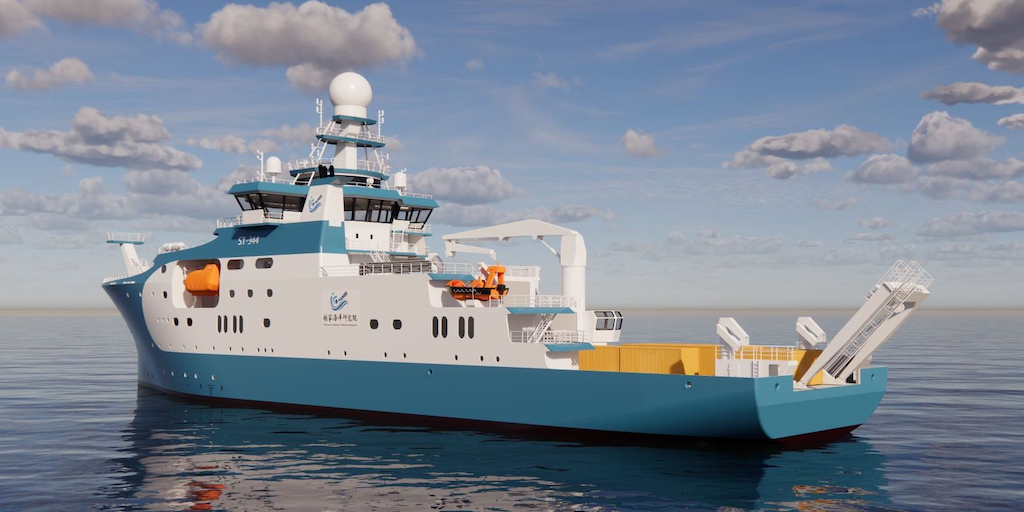
The largest contract secured by Marco Polo Marine is for the new marine research vessel to be built to a Skipsteknisk design for the National Academy of Marine Research (NAMR), administered by the Ocean Affairs Council of Taiwan.
In a deal worth S$198 million, the new research vessel is scheduled to take shape over a four-year construction period at the Marco Polo Marine group’s yard at Batam in Indonesia.
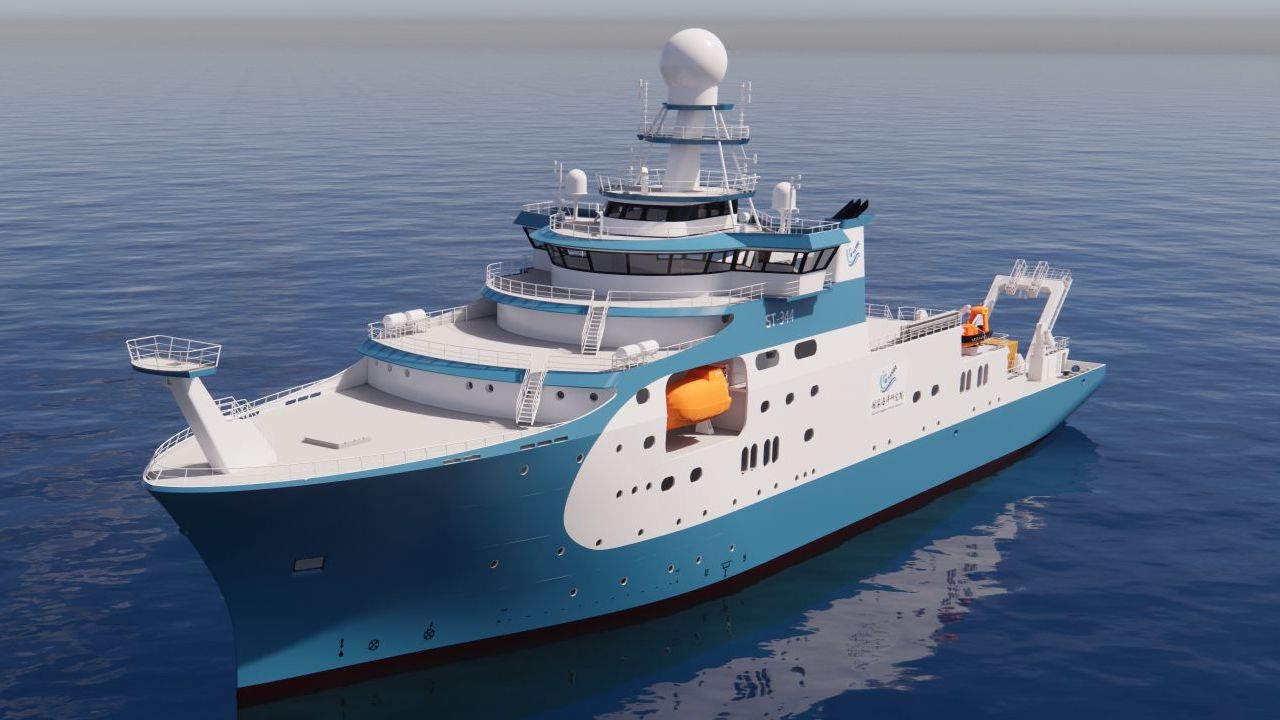
This new vessel is to be outfitted with a dynamic positioning (DP2) system and diesel-electric propulsion with twin azimuth thrusters, along with bow and retractable thrusters. It will also be equipped with a battery energy storage system and waste heat recovery system.
It is designed for low-noise operations or UWN(R), minimising acoustic output while the vessel is performing sensitive research operations, with an endurance of over 30 days. The vessel will be equipped with advanced wet and dry laboratories, as well as multibeam sonar systems, conductivity, temperature and depth (CTD) sensors, as well as ROV A-frames to support a wide range of scientific operations.
Scientific and research equipment will be procured from established European original equipment manufacturers, according to NAMR’s specifications, with integration supported by specialist consultants.
‘We are deeply honoured to be selected by NAMR for this project. This contract represents a landmark achievement for our shipbuilding division as the largest award in our unit’s history,’ said assistant managing director of manufacturing at Enterprise Singapore Soh Leng Wan.
‘This dual milestone is a strong validation of our shipyard’s versatile capabilities in building complex, high-specification vessels, and demonstrates the confidence clients place in our technical capabilities and execution track record. We are grateful for the support provided by Enterprise Singapore in facilitating this milestone. This project positions us firmly within the marine research and blue economy sectors, adding a valuable dimension to our portfolio alongside our established offshore wind vessel operations.’