
News
Fresh fish project goes international
“Fisch vom Kutter”, an innovative direct sales platform developed by a German FLAG, has inspired a similar initiative in Denmark, which is now open to fishermen across the country














“Fisch vom Kutter”, an innovative direct sales platform developed by a German FLAG, has inspired a similar initiative in Denmark, which is now open to fishermen across the country
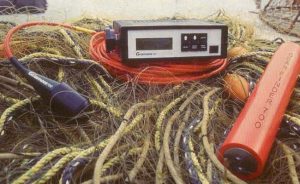
Picture it, Newfoundland 1992, Brad Henderson incorporates Notus Electronics Ltd. (Notus) with the goal of developing hydroacoustic equipment for the commercial fishing industry.

Marel will host its 12th annual Salmon Showhow at the Marel Salmon division in Nørresundby, Denmark, 6 February 2013.
Danish North Sea sole fleet is now successfully certified as sustainable against MSC environmental standard for sustainable and well managed fisheries.

The Danish Isefjord and East Jutland blue shell mussel fishery has been certified as a sustainable and well-managed fishery against the Marine Stewardship Council (MSC) environmental standard. This is the eighth fishery in Denmark to obtain MSC certification and products from the fishery will be eligible to carry the internationally recognized, blue MSC ecolabel. Becoming MSC certified means that the fishery now provides an additional 5,000 tonnes of MSC certified fish to consumers, adding to the already impressive Danish quantity of more than 100,000 tonnes sustainably caught seafood yearly.

The Danish Naval Design and Marine Consultancy Knud E. Hansen A/S has developed a highly efficient 50 m factory trawler with a focus on operating efficiency and maximised catch processing facilities.
The design delivers excellent fuel economy, reduced environmental impact, and the flexibility to be operated as a single or pair trawler.
Enhanced voice calling and new tracking functions for market leading terminals

Norwegian Veritas has re-certified TripleNine in accordance with ISO9001, ISO14001, GMP+ and MSC-coc.
Catch-quota management (CQM) is a result based management where targets (catch quotas, where all fish count on the fishers quota) are set, and the choice of method in harvesting is left to the exploiter together with the obligation to document (by E-log and CCTV) that targets are observed. At present management needs time to prepare and legislate and it regulates with rigid and uniform rules. This is problematic in an environment where the ideal harvesting pattern is highly complex and variable, and it often leads to conflict between regulation and fishermen’s perception of the best practice. In contrast a result based management incentivizes the exploiter to continuously adapt and improve his fishery against the targets, which in fisheries policy coincides with the main objective, namely the observance of removals of fish according to the MSY principle.

Package combines new SAILOR 900 VSAT, SAILOR FleetBroadband, Vizada Services and Vizada XChange to provide global broadband coverage at all times.