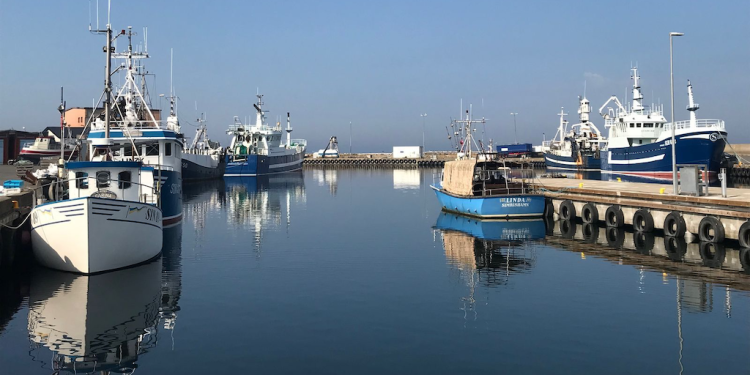





As the Swedish government plans to permanently move the trawl limits further offshore along the country’s Baltic coast, industry organisation Vi Svenska Fiskare states that while sharing the ambition of safeguarding stocks, permanent regulations must be based on scientific findings and a comprehensive impact assessment.
‘The ongoing trial, which is due for final reporting in 2027, should therefore be evaluated before further restrictions are introduced,’ a representative of Vi Svenska Fiskare said, commenting that this trial involving an extended trawl limit in the Baltic Sea has been underway since 2025, while the Government now is looking to proceed with permanently moving the trawling limit to 12 nautical miles.
‘Fishing should primarily be managed through scientifically grounded quota advice, rather than through blanket, permanent geographical area closures. Such closures should be used only when there is clear scientific evidence that they are necessary and effective. Therefore, before the trawling limit is permanently moved, the trial and its consequences must be thoroughly analysed, said Vi Svenska Fiskare chairman Mathias Ivarsson.
He stated that their position aligns with the Swedish Agency for Marine and Water Management’s (HaV) view on ecosystem-based fisheries management, that this should be based on a holistic view of ecosystems, take into account the interactions between species, and be adaptable as new knowledge becomes available.
The government’s proposal has limited consequences for larger vessels that primarily fish further out at sea, but it could create significant problems for mid-sized vessels that fish – wholly or partially – for human consumption along the coast. The limited exemptions proposed do not provide the long-term certainty that the affected companies need.
‘Our position is that all vessels fishing and sorting their catches for human consumption should be able to fish within the 12-nautical-mile limit, regardless of vessel size. This is essential if Sweden is serious about the goals in Food Strategy 2.0 regarding the strengthening of food production,’ said Johannes Claeson, adding that regulations must also take into account the practical realities of fishing. A vessel primarily fishing for human consumption must be able to find an alternative outlet for the portion of the catch that the market or processing industry cannot temporarily accept. Otherwise, the rules risk being so restrictive that they prove unworkable in practice.
‘Moving the trawling limit further offshore could offer smaller vessels better opportunities for coastal fishing. However, in itself, it does not generate more Swedish landings for human consumption. That requires, above all, increased landing and processing capacity, as well as access to the fishing grounds where the fish are actually found, Mathias Ivarsson said.