


The message folowing a joint meeting between Norwegian, Swedish and Danish industry organisations is that they stand together to ensure that sustainable fisheries will also have a clear and long-term place in shared sea areas in the future.
The Norwegian Fishermen’s Association, the Danish Fisheries Association and Vi Svenska Fiskare met at a summit held in Svalbard. They state that fisheries provide climate-friendly food production, value creation, preparedness and the foundation for thriving coastal communities. At the same time, pressure on fishing grounds is increasing due to marine protection, offshore wind development, closed areas, climate and environmental requirements, and other uses of the sea.
‘Our shared ambition is clear: Fisheries must not be managed out of existence. They must be further developed. Through knowledge, technology and responsible resource management, we will contribute to both healthy seas and viable fisheries for the future,’ the organisations have stated in a joint starement.
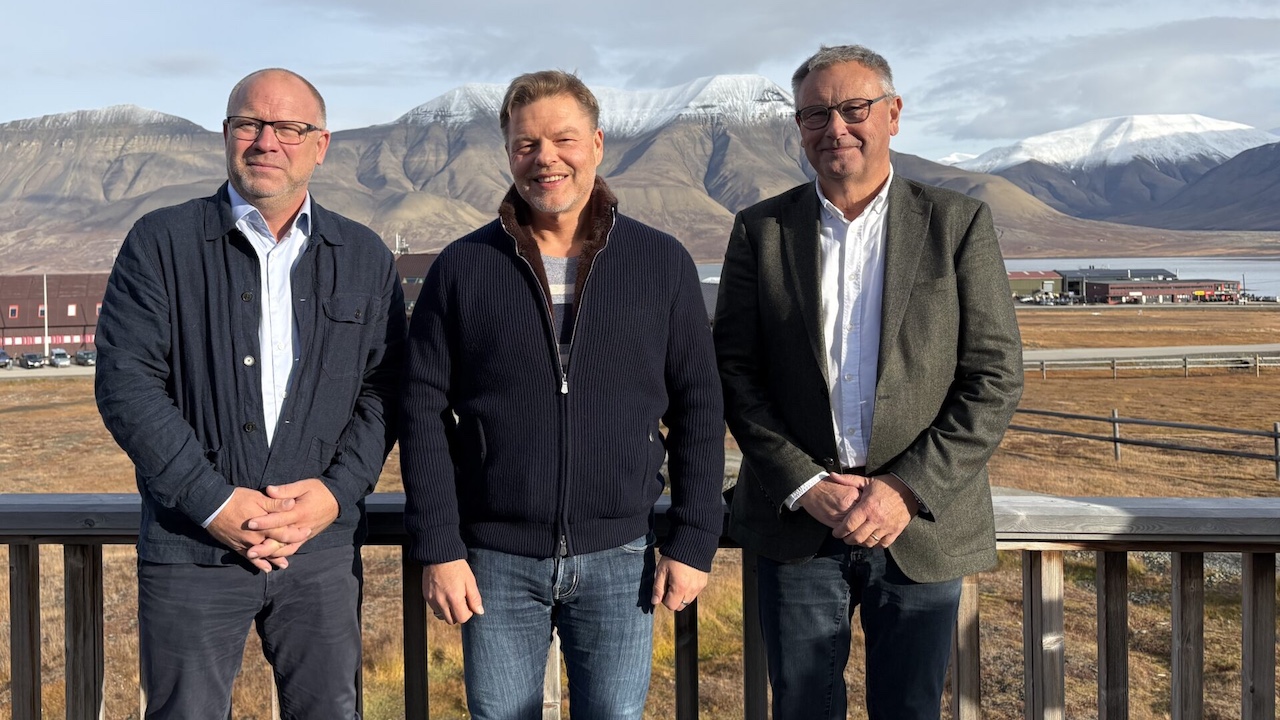
‘The experiences of our three countries demonstrate the need for closer cooperation in addressing these challenges. For us, the fishing industry’s licence to operate is about both responsibility and legitimacy. Fisheries must fulfil their role in society through sustainable harvesting, improved documentation, technological development and knowledge sharing. Fishers are present at sea throughout the year and possess valuable knowledge about fish stocks, catch patterns and changes in the ecosystem. This knowledge must be incorporated earlier and more systematically into research and fisheries management.’
‘We must be proactive in securing the long-term legitimacy of fisheries. We do this through sustainable harvesting, better documentation, technology and by sharing the knowledge fishers gain through their daily presence at sea,’ commented Jan Roger Lerbukt, chairman of the Norwegian Fishermen’s Association.
The thinking is also that fisheries management must take a more holistic view of the ecosystem. Fish stocks affect one another through predation, competition and access to food, among other factors. Greater knowledge of multispecies dynamics is essential to developing an adaptive management system capable of responding to changes in fish stocks and the wider ecosystem.
‘Fishers are at sea throughout the year and see changes as they happen. If we are to succeed in maintaining both healthy fish stocks and viable fisheries, this knowledge must be used alongside scientific research, and fishers must be involved when solutions are being developed,’ said Mathias Ivarsson of Ve Svenska Fiskare.
The fishing industries of Norway, Denmark and Sweden aim to work towards improving cooperation on data, information concerning closed areas, regulations and shared fish stocks. This will provide both fishers and public authorities with a stronger and more up-to-date knowledge base. We believe BarentsWatch could serve as an appropriate and effective platform for further development for the benefit of fisheries in all three countries.
The Norwegian Fishermen’s Association, the Danish Fishermen’s Association and Vi Svenska Fiskare stand united in their conviction that sustainable fisheries must continue to have a clear and long-term place in our shared sea areas. This is the unequivocal message following the joint meeting of the three organisations in Svalbard.
‘We must protect the marine environment, but we need to do so in a way that also leaves room for sustainable fisheries. As more sea areas are allocated to protection, energy and other uses, we must look at the cumulative impact and ensure that measures are proportionate to the actual impact we are seeking to reduce,’ said DFPO chairman Svend-Erik Andersen.