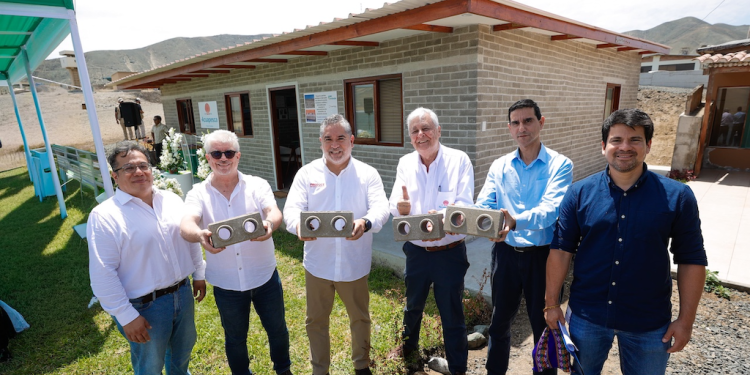




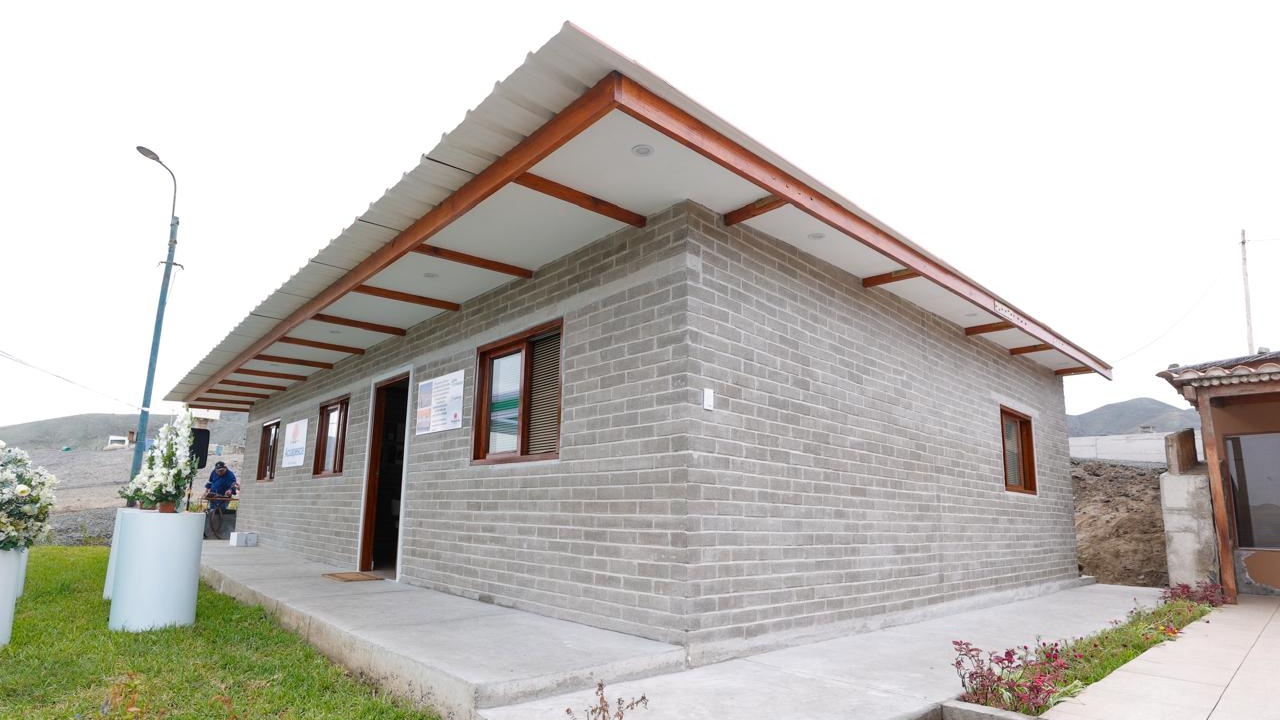
The first house built using blocks made from ground scallop shells has been opened by Peru’s Minister of Production Juan Carlos Requejo.
The model house was built with approximately 8300 ecoblocks, made from nearly 19 tonnes of ground shells. According to the project’s technical study, this amount is equivalent to 8.3 tonnes of CO₂ incorporated into the blocks, contributing to carbon storage in the building material.
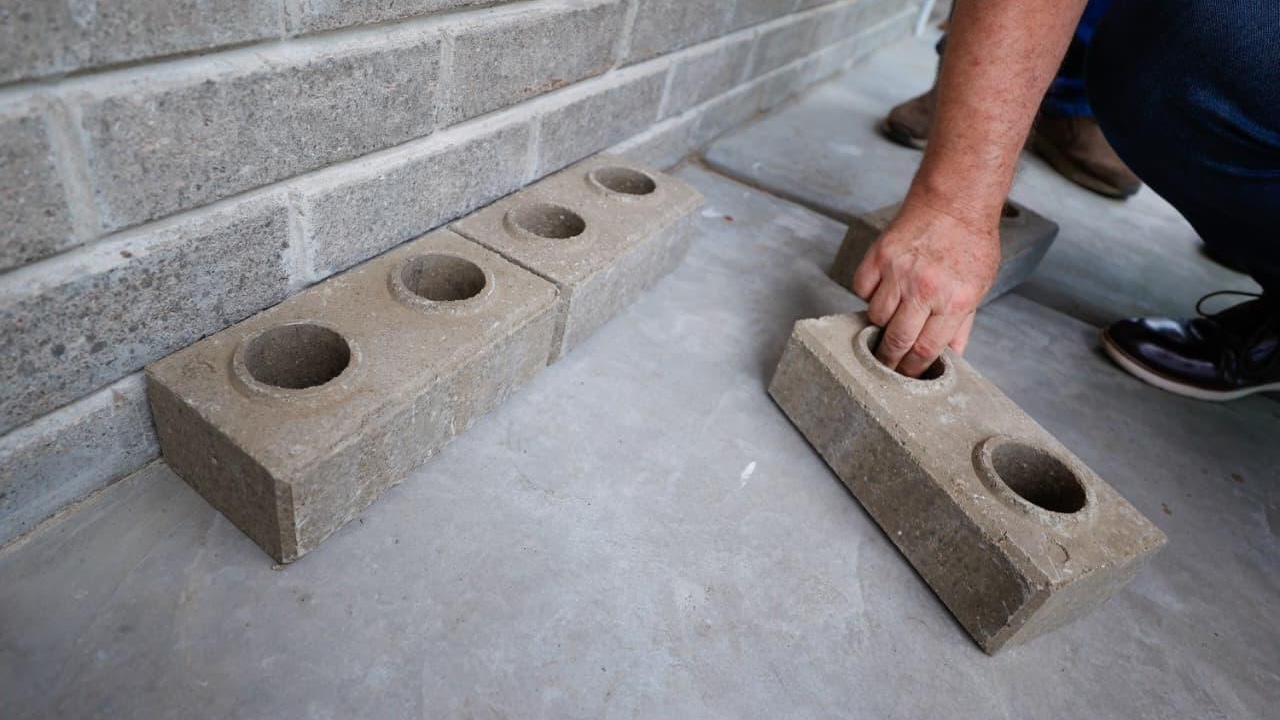
Unlike conventional bricks, ecoblocks are manufactured using hydraulic pressing, without the need for firing. The mixture used contains approximately 65% ground shells, which replace some conventional aggregates.
The technology employed is based on the ISCEB (Interlocking Stabilised Compressed Earth Blocks) system of interlocking blocks. According to project estimates, their use can reduce the cost of walls by up to 50% compared to conventional blocks and approximately 30% the construction time, with potential applications in self-build projects and social housing developments.
The initiative has the potential to transform aquaculture waste into sustainable building materials and offers an alternative for utilising the approximately 40,000 tonnes of shells generated annually, primarily between Casma and Piura.
‘We are demonstrating that this is not an environmental liability, but a social asset. At the Ministry of Production, we want to help this solution scale up, gain partners, and become a viable alternative. It’s not just about inaugurating a building, but about transforming this innovation into a solution for the country’s production challenges,’ Minister Requejo stated.
‘This reflects what we always talk about, how government, the private sector, and academia can work together to find solutions. Today, we have found a concrete alternative to a problem that ten years ago we saw as difficult to solve.’
The project is promoted by Acuapesca, with technical support from Expertisse Plus Consultores SCRL, and is co-financed by ProInnóvate, a programme under the Ministry of Production. The initiative is in its final stage of implementation and aligns with the principles of the circular economy and responsible production.